
Key Takeaways
- Yes, LPNs can work remotely: While less common than RN roles, jobs exist in telehealth, insurance, and administrative support.
- Top Roles: Telephone Triage, HEDIS Abstractor, Utilization Management, and Prior Authorization.
- Experience is key: Most remote employers want at least 2-3 years of bedside or clinical experience before they let you work unsupervised at home.
- Tech Requirements: You usually need a dedicated quiet space, high-speed hardwired internet (no WiFi!), and dual monitors.
- Where to look: Check major insurers like UnitedHealth Group, Humana, or Aetna, and search keywords like "HEDIS," "Triage," or "Reviewer."
Yes, LPNs Can Totally Work From Home
Let's cut right to the chase because I know you're tired of searching "nursing jobs" and only seeing hospital shifts. Yes, Licensed Practical Nurses (or LVNs if you're in Texas or California) can work from home. It is not a myth. While it is true that Registered Nurses (RNs) often have a wider variety of remote options, the landscape has changed a lot since 2020. Insurance companies, telehealth startups, and managed care organizations are hiring LPNs right now to work remotely.
You don't have to break your back lifting patients for the rest of your career. If you are burned out from the floor or just need a schedule that fits your family life better, remote work is a real option. But, it requires a different set of skills and a little bit of patience to find the right gig.
I'm going to walk you through exactly what these jobs look like, how much they pay, and how to snag one.
The Best Remote Jobs for LPNs
Not every remote medical job is suitable for an LPN scope of practice, but there are four or five specific niches where LPNs thrive. Here is where you should be looking.
1. Telephone Triage Nurse
This is probably the most common remote role. Basically, patients call in with symptoms, and you use a computerized protocol system (like the Schmitt-Thompson protocols) to advise them on what to do. You act as the gatekeeper.
You aren't diagnosing anyone-that's outside the LPN scope. Instead, you are gathering data. If a mom calls because her toddler has a fever, you ask specific questions prompted by the software. Based on the answers, the system tells you if she needs to go to the ER immediately, make an appointment for tomorrow, or just push fluids at home.
Why it's great: You still get to use your clinical knowledge and help people directly.
The catch: It can be high stress. You have to make quick decisions and sometimes deal with panicked callers. Also, many of these jobs are for "after-hours" lines, so you might still work nights or weekends.
2. HEDIS Abstractor / Quality Improvement
If you enjoy paperwork more than people this might be your jam. HEDIS stands for Healthcare Effectiveness Data and Information Set. It’s a tool used by more than 90% of America's health plans to measure performance.
In this role, you review patient charts to make sure the insurance company and doctors are meeting specific quality measures. For example, did the diabetic patient get their A1C checked this year? You dig through the digital records to find the proof.
Why it's great: It is usually very independent work. You put your headphones on and grind through charts. It is also standard business hours usually, Monday through Friday.
The catch: It is often seasonal work. "HEDIS season" usually runs from January to May. However, if you're good, many companies keep you on for other quality review audits year-round.
3. Prior Authorization and Utilization Management
You know when a doctor prescribes a fancy new medication or an MRI, and the insurance company has to say "yes" before the pharmacy fills it? That process is often handled by nurses.
As an LPN in this role, you review requests from clinics to see if they meet the insurance plan's guidelines. If the checklist says "Patient must try physical therapy before getting an MRI," you check the records to see if they did PT. If they didn't, you might have to flag it or deny it (based on strict criteria).
Why it's great: It's very structured. There is a clear rule for everything.
The catch: You can feel like the "bad guy" sometimes when you have to deny care because of a technicality. It requires thick skin.
4. Chronic Care Management (CCM)
Medicare pays doctors to check in on patients with chronic conditions (like hypertension, diabetes, or COPD) every month. Doctors are too busy to make these calls, so they hire remote companies to do it.
You call a list of patients, ask how they are doing, make sure they are taking their meds, and document the call. You are basically a professional "checker-upper."
Why it's great: You build relationships. You might talk to the same grandma every month for a year. It's lower stress than triage.
The catch: It can be repetitive. Also, you have to be good at keeping people on the phone for at least 20 minutes to meet billing requirements, which takes some social skills.
Salary: What Can You Expect?
Money talks, right? Generally speaking, remote LPN jobs pay comparable to clinic jobs, but usually less than nursing home or hospital staffing agency gigs. You are trading the physical labor and the commute for a slightly lower hourly rate in some cases.
According to data from Payscale and general job market trends in 2023-2024, remote LPNs typically make between $22 and $32 per hour. This depends heavily on where you live and who you work for.
Big insurance companies (UnitedHealth, Humana, Anthem) tend to have better benefits packages, which adds to the total value. If you get into a specialized role like auditing or data abstraction, you can sometimes negotiate for more, especially if you have experience.
The Tech Setup: What You Actually Need
Working from home isn't just sitting on the couch with a laptop. Companies have strict HIPAA requirements to protect patient data. I've seen friends get hired and then struggle because their house wasn't ready.
- Private Room: You need a door that locks. If you are handling patient data or talking on the phone, you cannot have kids, dogs, or partners walking in. It’s a HIPAA violation.
- Hardwired Internet: This is the big one. Most companies will not let you use WiFi. You need an ethernet cable running from your router directly to your computer. If your router is in the living room and your office is upstairs, you gotta figure that out.
- Dual Monitors: Trust me, you want two screens. You'll have the patient's chart on one and your protocol or email on the other. Some companies send you the computer equipment, but not all of them.
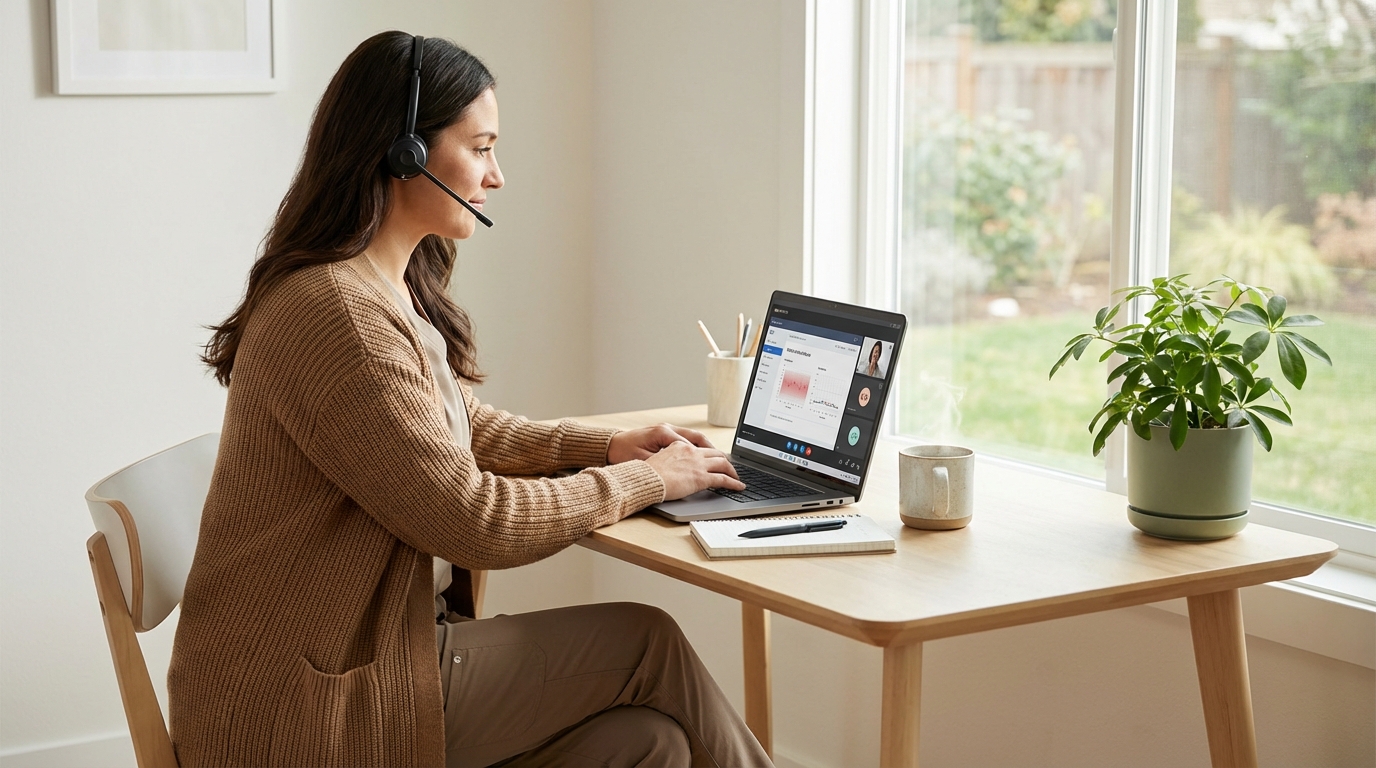
- Headset: A good noise-canceling headset is vital so callers don't hear your neighbor mowing the lawn.
How to Land the Job (Resume & Interview Tips)
Competition for these jobs is fierce. I mean, who doesn't want to work in their pajamas? (Well, business casual from the waist up). To stand out, you have to tweak your approach.
Fix Your Resume
Your floor nursing resume lists things like "wound care" and "passing meds." That is great, but remote employers don't care as much about your hands-on skills. They care about your brain and your computer skills.
Highlight these keywords:
- EMR Experience: List every software you’ve used (Epic, Cerner, Allscripts).
- Communication: Mention experience talking to doctors, educating families, or handling phone calls.
- Autonomy: Use phrases like "Managed caseload independently" or "Self-directed workflow."
- Typing Speed: If you can type fast (over 40-50 WPM), put it on there!
Where to Search
Don't just look on Indeed. Go straight to the source. Go to the "Careers" pages of major health insurance companies. Search for keywords like:
- "Clinical Reviewer"
- "Prior Auth LPN"
- "HEDIS Abstractor"
- "Care Coordinator"
- "Telephonic Nurse"
Pro Tip: Look for jobs labeled "Compact Licensure." If you have a compact nursing license (NLC), you are way more valuable because you can take calls from patients in over 30 states.
The Pros and Cons: Real Talk
I want to be authentic with you-working from home is amazing, but it has downsides too. It's not for everyone.
The Good Stuff
No Commute: You save money on gas and wear and tear on your car. Plus, you get that hour of your life back every day.
Body Preservation: No more lifting 200-pound patients. Your back and knees will thank you in ten years.
Office Politics: While they still exist remotely, it's much easier to ignore drama when you aren't stuck at a nurses' station with it.
The Tough Stuff
Loneliness: Nursing is a social job. You bond with your crew in the trenches. At home, it’s just you and the cat. It can get isolating if you don't make an effort to leave the house after work.
Sedentary Lifestyle: You go from walking 10,000 steps a shift to walking 500. You have to be intentional about exercise or the "work from home weight" will creep up on you.
Micromanagement: Since your boss can't see you, they track you digitally. They track your mouse movements, how long you are "idle," and how many calls you take per hour. It can feel like Big Brother is watching.
A Note on Scams
Please be careful. Because remote work is so desirable, there are scams out there. If a "recruiter" contacts you on WhatsApp or asks you to buy your own equipment with a promise to reimburse you via check, run away. Legitimate companies (like Aetna, Cigna, etc.) will send you equipment or have a very formal process. They will never ask you for money upfront.
Working remotely as an LPN is a fantastic career move if you are ready to hang up your stethoscope and pick up a headset. It requires learning new software and getting used to a quiet house, but for many, the trade-off is absolutely worth it.
Frequently Asked Questions
Do I need a Compact State License?
It is not strictly required, but it is a huge plus. Most remote jobs involve talking to patients in multiple states. If you live in a compact state (like Texas, Florida, or Tennessee), make sure your license is updated to "multistate" status. It makes you much more hireable.
Can I work from home as a new grad LPN?
Honestly? It's really hard. Most companies require 2 to 3 years of clinical experience. They need to know you have the medical knowledge ingrained in your brain because you won't have a charge nurse standing next to you to answer questions. Get your time in at a clinic or nursing home first, then apply.
Is the pay less than bedside nursing?
Sometimes, yes. You generally don't get shift differentials (night/weekend pay) or hazard pay. However, when you factor in saving money on gas, scrubs, and lunches out, it often evens out.
What is the best time of year to apply?
For HEDIS and quality review jobs, the hiring surge starts in August/September to prepare for the season starting in January. For triage and insurance roles, hiring is pretty consistent year-round.
Can I work from anywhere? Like a coffee shop?
No. Because of HIPAA laws regarding patient privacy, you must work from a private, secure location. Coffee shop WiFi is not secure, and people can overhear you. You generally have to work from your registered home address.