
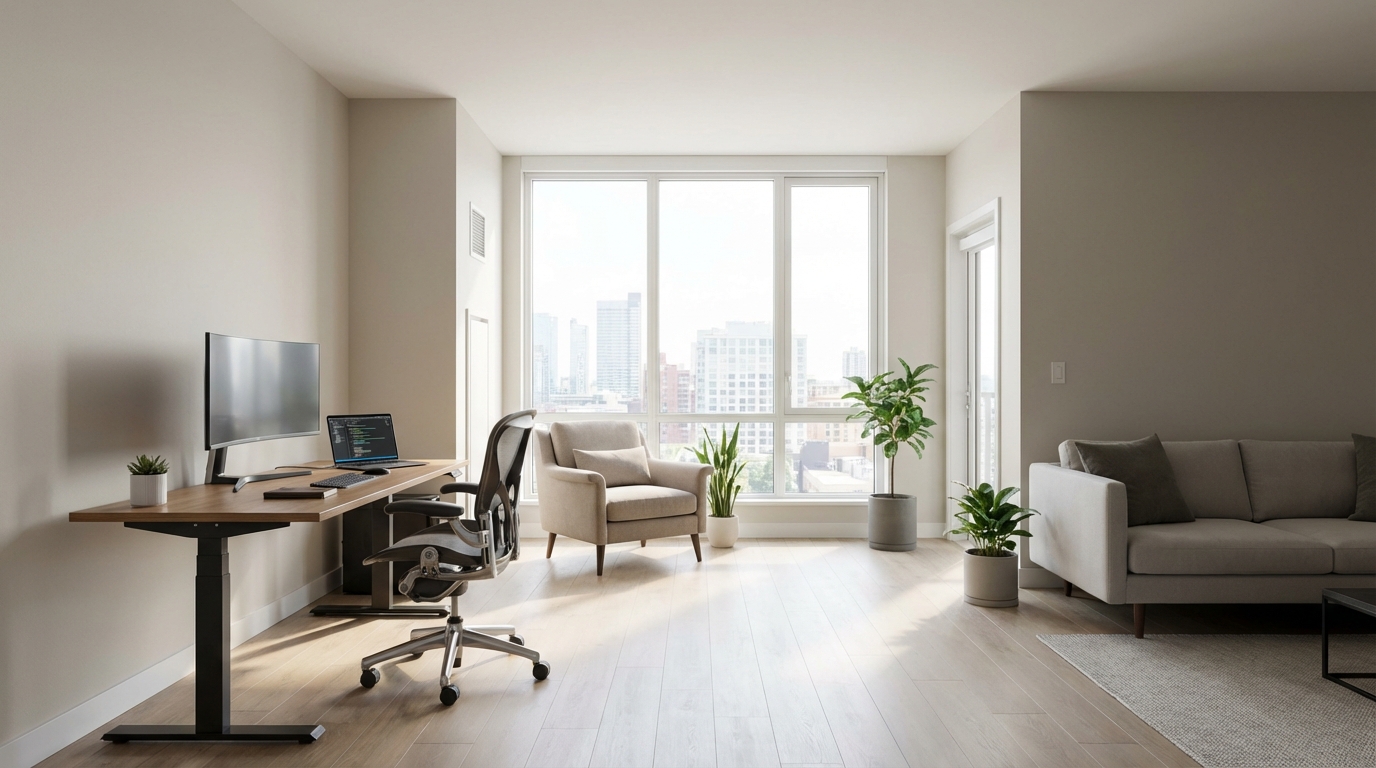
Key Takeaways
- Layout Matters Most: Look for "1-bedroom + den" floor plans or "junior 4" layouts. A separate space for your desk is critical for mental separation.
- Building Connectivity: Don't just ask if they have Wi-Fi. Ask if the building is wired for Fiber Optic internet (like Google Fiber or Fios).
- Co-working Amenities: The best modern apartments now feature "business lounges" or co-working spaces in the lobby. This gives you a secondary office without leaving home.
- Soundproofing: Concrete construction (high-rises) usually blocks sound better than wood-frame (garden style). Quiet is king for Zoom calls.
- Lighting: North-facing windows offer consistent light without glare, while South-facing gives you the most sun. Avoid glare on your monitor.
If you are looking for the best apartment for remote work, you need to prioritize three things: a dedicated nook or den for your desk, high-speed fiber internet availability, and community amenities that offer a change of scenery. Modern "luxury" complexes often have co-working lounges which are perfect for this, but older buildings with thick walls might actually be quieter.
Honestly finding a place to live is hard enough without worrying about whether your Zoom connection is going to drop or if your boss will hear your neighbor's dog barking. Since remote work isn't going anywhere, your apartment needs to do double duty. It's your sanctuary and your headquarters.
Here is a deep dive into exactly what you should look for.
The Layout: Why You Need More Than Just a Bedroom
Back in the day we just looked for a big living room and a decent kitchen. But when you work from home, the floor plan is everything. You cannot work from your kitchen island forever. It’s bad for your back and it makes it impossible to "leave" work at the end of the day.
The "One Bedroom Plus Den"
This is the holy grail of remote work apartments. It is basically a one-bedroom apartment that has an extra little alcove or room. Usually, it doesn't have a closet or a window, so legally they can't call it a second bedroom. But for you? It's perfect.
Real estate agents sometimes call these "flex spaces." Having a physical door you can close (or at least a corner you can turn your back on) helps your brain switch between "work mode" and "relax mode." If you can find a layout like this grab it.
Studios with Alcoves
If you are on a budget and looking at studios, try to find L-shaped layouts rather than just a big square box. An L-shape lets you tuck your bed around a corner so it isn't visible on your video calls. There is nothing worse than having your unmade bed in the background of a quarterly review.
Internet Infrastructure: The Invisible Utility
Most people tour an apartment, look at the water pressure, and check the view. They forget to check the most important thing for a remote worker: the internet wiring.
Here is the deal. Old buildings often run on old copper wiring. This means you might get decent download speeds, but your upload speeds will be trash. When you are on a video conference, upload speed is what sends your face and voice to your team. If it's slow, you freeze.
According to tech experts, you want a building that is "Fiber Ready." Fiber optic internet offers symmetrical speeds (meaning upload is as fast as download). When you tour a place, don't ask the leasing agent "Is the internet good?" They will just say yes. Ask them "Which providers service this building?" If they say a fiber provider, you are golden.
The Rise of the "Co-working" Apartment Building
This is a huge trend in modern apartment living. Developers realized that everyone is working from home so they started changing their lobbies. Instead of just a fancy couch nobody sits on, new buildings are putting in full co-working lounges.
I’ve seen buildings that have:
- Soundproof phone booths for private calls.
- Conference rooms you can reserve (great if you need to impress a client in person).
- Community printers and scanners.
- Coffee bars.
This is a game changer because it lets you "go to work" just by taking the elevator downstairs. It separates your living space from your working space, which is great for your mental health. Plus, if your internet upstairs goes out for some reason, you have a backup plan in the lobby.
Noise Control and Construction Type
You can buy noise-canceling headphones, but you can't cancel the vibrations of your upstairs neighbor doing jumping jacks. The construction material of the building makes a massive difference here.
Concrete vs. Wood Frame
If you have the choice, pick a high-rise building or a converted industrial loft. These are usually made of concrete and steel. Concrete is amazing at blocking sound. You probably won't hear your neighbors at all.
Many modern "mid-rise" apartments (usually 4 to 5 stories) are built with wood frames because it's cheaper. These are often called "stick-built." They look nice and have granite countertops, but the walls can be paper thin. If you are on the phone all day, a wood-frame building might drive you crazy unless you are on the top floor.
Lighting and Your Circadian Rhythm
Sitting in a dark room all day is depressing. You need natural light to keep your energy up. But, you also have to worry about glare on your computer screen.
North-Facing Windows: These provide consistent, soft light throughout the day. Artists love north light because it doesn't change much. It’s great for working because you rarely get direct sunbeams blinding you.
South-Facing Windows: These get the most direct sunlight. It’s cheerful and bright, but it can get hot and create crazy glare on your monitor. If you choose a south-facing unit, make sure the blinds are good quality.
Location: The "15-Minute City" Concept
Since you don't have a commute anymore, you don't need to live near the highway or the train station. This frees you up to live somewhere more fun. However, because you are home all day, you will get cabin fever.
Look for a neighborhood with a high "Walk Score." You want to be able to walk to a coffee shop, a gym, or a park within 15 minutes. Wikipedia describes the "15-minute city" as an urban planning concept where daily necessities are within a short walk or bike ride. For a remote worker, this is crucial.
When you finish work at 5 PM, you don't want to get in a car. You want to walk out your door and be somewhere. Being able to escape your apartment for a quick coffee break at 2 PM can save your sanity.
Power Outlets and Technical Setup
This sounds small, but it's annoying if you get it wrong. Older apartments were not built for the amount of electronics we have today. I once lived in a place that had exactly one outlet in the living room. It was a nightmare of extension cords.
When you tour an apartment, look at the walls.
- Are there outlets where you plan to put your desk?
- Are they 3-prong outlets (grounded) or those old 2-prong ones?
- Is the electrical panel modern?
If you run a powerful PC, two monitors, a printer, and an AC unit, you don't want to be tripping breakers every time you turn on the microwave.
Specific Apartment Types to Look For
So, putting it all together, here are the specific categories of apartments that are winning for remote work right now.
1. The Modern "Amenity-Rich" High Rise
These are usually found in city centers. They are expensive, but they offer the most "all-in-one" lifestyle. You get the concrete soundproofing, the fiber internet, and the co-working lounge downstairs. If you are an extrovert who misses office chitchat, this is your best bet because you'll meet people in the lounge.
2. The Garden-Style Suburb (Top Floor)
If you prefer quiet and green space, look for a garden-style complex in the suburbs. But here is the trick: Only rent the top floor. Since these are usually wood construction, being on top ensures nobody is stomping on your head during a meeting. These apartments usually have more square footage for the price, meaning you can afford that 2-bedroom unit and have a real office.
3. Adaptive Reuse Lofts
These are old factories or warehouses turned into apartments. They often have high ceilings and massive windows. The thick brick walls are great for sound, and the open layouts feel spacious. However, heating and cooling these big spaces can be pricey, so check the utility estimates.
Questions to Ask the Leasing Agent
Before you sign a lease, don't be afraid to grill them. It's a lot of money and you are going to be spending 24 hours a day there. Here is a cheat sheet of questions:
- "Can I test the cell reception in the unit?" (Pull out your phone and check. If your internet dies, you need your hotspot to work).
- "Do you allow package delivery to the door?" (You're home, so this is easier, but secure lockers are better).
- "Is there a quiet hours policy?"
- "Can I mount things on the walls?" (You might want to mount a monitor or sound-absorbing foam).
Making the Space Your Own
Once you find the place, you have to set it up right. Don't just shove a desk in the corner. If you have a "nook," paint the wall behind your desk a different color. This visually separates the "office" from the "home."
Invest in good lighting. Ring lights are okay, but bouncing a nice lamp off a white wall looks more natural. And get a good chair. According to pretty much every chiropractor ever, your dining room chair will destroy your spine if you sit in it for 8 hours a day.
Remember, the best apartment for remote work is one that allows you to leave work behind when the day is done. Whether that's by closing a door to a den or just walking downstairs to a lounge, separation is the key to happiness.
Frequently Asked Questions
Q: Can I really work full-time from a studio apartment?
A: Yes, but it requires discipline. You need to create a "visual divider." Use a bookshelf or a folding screen to hide your bed from your desk. It helps your brain understand when it is time to sleep vs. work.
Q: Is 5G home internet good enough for remote work?
A: It depends. For emails and basic web browsing, sure. But if you are on Zoom or Teams calls all day, a hardwired cable or fiber connection is much more stable. Wireless connections can fluctuate during storms or peak usage times.
Q: How do I know if a building is too noisy before I move in?
A: Try to visit the apartment at different times of the day. If you only visit at 10 AM on a Tuesday, everyone might be at work (or working quietly). Try to drive by on a Friday evening or Saturday afternoon to hear the "real" volume of the neighborhood.
Q: Are co-working spaces in apartments actually usable?
A: In newer luxury buildings, yes. They are designed for it. In older buildings that just slapped a "business center" label on a room with a dusty computer, no. Look for comfortable seating, plenty of outlets, and good lighting.
Q: Does my renter's insurance cover my work equipment?
A: Usually, yes, but up to a limit. If you have expensive specialized gear, you might need a "rider" or additional coverage. Also check with your employer; often their insurance covers the laptop they sent you.