
Key Takeaways
- The Short Answer: Your remote start isn't working because your car's computer (ECU) disabled it intentionally. This is a safety feature to prevent the engine from running without you there to monitor it when there's a problem.
- Most Common Fix: Check your gas cap! A loose gas cap triggers an emissions error, turns on the check engine light, and kills the remote start. Tighten it and drive for a few days.
- The Solution: You need to read the error codes using an OBD2 scanner (AutoZone does this for free) to find the real issue.
- Resetting: Clearing the light might make remote start work temporarily, but if you don't fix the broken part, the light and the lockout will come back.
Why Your Remote Start is Dead (And Why It’s Actually a Good Thing)
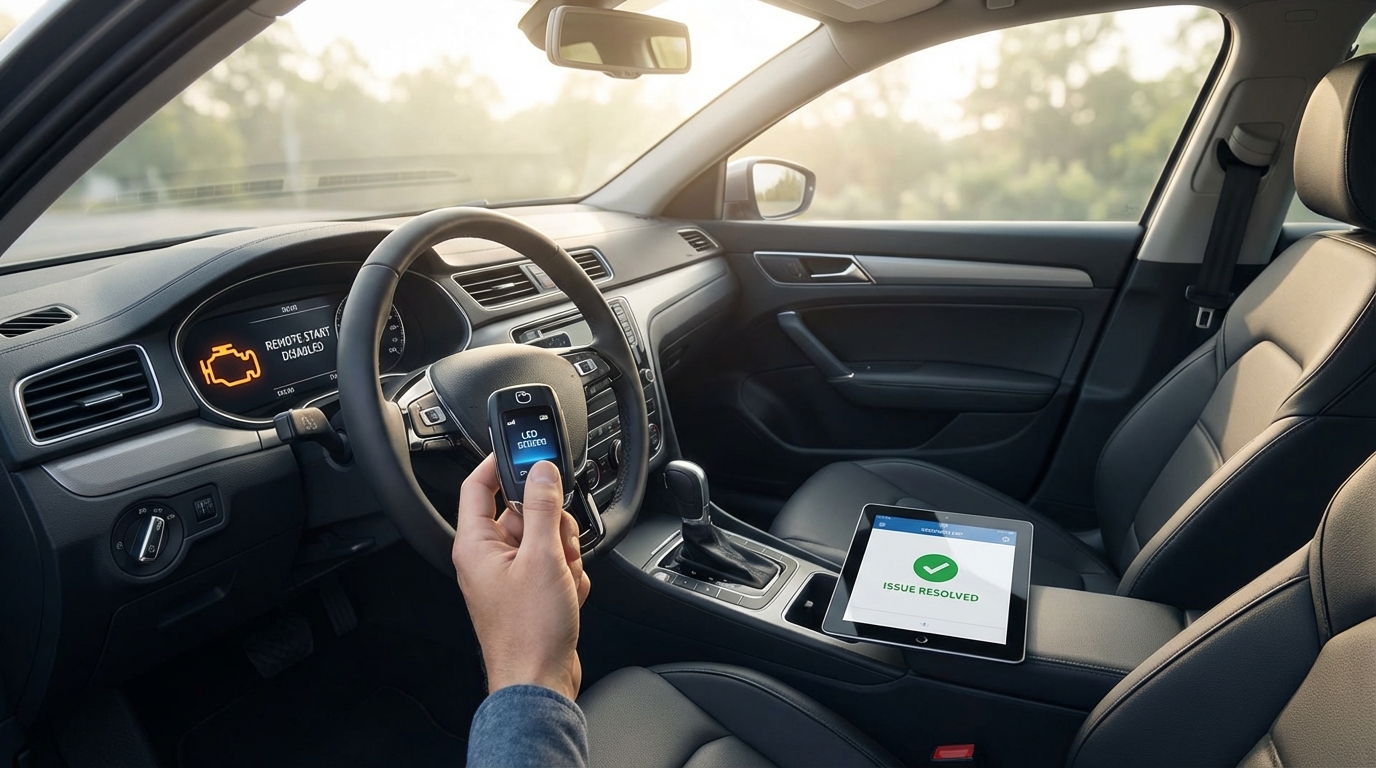
Here is the direct answer you are looking for: Your remote start stopped working because your Check Engine Light (CEL) is on.
Most modern vehicles-whether it's a Ford F-150, a Chevy Silverado, a Honda, or a Toyota-are programmed to disable the remote start system the second that orange engine light pops up on the dashboard. It feels like the car is punishing you, but its actually trying to save itself.
Think about it. When you remote start a car, you aren't sitting in the driver's seat. You’re inside your house drinking coffee or putting on your shoes. If the engine has a serious problem-like low oil pressure or a massive misfire-and it starts running without anyone watching the gauges, the engine could destroy itself in minutes.
So, the manufacturers decided that if the car detects any fault code (even a small one), it cuts power to the remote start module. It's a "fail-safe" mode. The car is saying, "I'm sick, please don't make me run unless you are here to supervise me."
Now that we know why it's happening, lets dig into how you can fix it yourself without spending a fortune at the dealership.
The First Thing You Must Check: The Gas Cap
Before you freak out and think your transmission is blowing up, go outside to your car right now. I'm serious. Go check your gas cap.
A loose, cracked, or missing gas cap is probably the number one reason for a "Check Engine Light Remote Start Not Working" situation. It sounds stupid, but here is the logic:
Your car has a sealed fuel system (the EVAP system). If the gas cap isn't clicked on tight, air leaks into the tank. The car's computer notices the pressure is wrong, assumes there is a fuel vapor leak, and throws a Check Engine Light. Once that light is on, the remote start is disabled.
The Fix:
Take the cap off. Look at the rubber seal (the O-ring) to make sure it isn't cracked. Put it back on and turn it until it clicks at least 3 times. If the cap felt loose, that was almost certainly your problem.
Note: The light won't turn off immediately. You usually have to drive the car for 50 to 100 miles, or through a few "drive cycles" (start, drive, warm up, cool down) for the computer to realize the leak is gone.
How to Troubleshoot if It's Not the Gas Cap
Okay so you checked the gas cap and it was tight. That means something else is going on. You need to find out what "code" the computer is throwing.
You do not need to be a mechanic to do this. You just need a tool called an OBD2 Scanner.
Step 1: Get the Codes
You have two options here:
- The Free Way: Go to an auto parts store like AutoZone, O'Reilly Auto Parts, or Advance Auto Parts. Walk to the counter and say, "My check engine light is on, can you read the code for me?" They will do it for free. They plug a little handheld device into a port under your steering wheel, and it gives them a code like "P0300" or "P0442". write that code down!
- The DIY Way: Buy a cheap OBD2 scanner on Amazon. You can get a basic one for like $20, or a Bluetooth one that connects to your phone (like BlueDriver) for a bit more. I honestly recommend keeping one in your glovebox anyway. It saves so much stress.
Step 2: Understand the Code
Once you have the code (like P0455), Google it along with your car model. For example, search for "P0455 Chevy Silverado".
Here are the most common codes that kill remote start:
- P0440 / P0442 / P0455 (EVAP System): This is usually the gas cap or a leak in a vent valve. It's not dangerous to the engine, but it stops remote start because of emissions regulations.
- P0300 series (Misfires): This means a spark plug or ignition coil is bad. The engine is "stumbling." The computer disables remote start because running a misfiring engine can damage the catalytic converter.
- P0128 (Thermostat): This is super common in winter. It means the engine isn't warming up fast enough. Since remote start is often used to warm up the car, the system disables it because it knows the heater won't work right anyway.
- O2 Sensor Codes: These sensors measure exhaust fumes. If they fail, the car wastes gas, so the remote start gets locked out.
Can I Just Reset the Light to Get Remote Start Back?
Yes and no. Mostly no.
Technically, if you use a scanner to "Clear Codes," the Check Engine Light will turn off. As soon as that light is off, your remote start will work again. However, this is usually a temporary fix.
If you have a bad oxygen sensor or a legitimate vacuum leak, the car acts like a strictly parent. It will run a self-check after you drive for 10 or 20 miles, realize the part is still broken, turn the light back on, and disable your remote start again.
The only way to get your remote start back permanently is to actually fix the problem causing the code.
The "Battery Disconnect" Trick
People always ask me, "Can I just disconnect the battery to reset the light?"
Sure, unhooking the negative battery terminal for 15 minutes will usually reset the computer and turn off the light. But just like using a scanner, the light will come back if the part is broken. Also, disconnecting the battery resets your radio presets, your clock, and sometimes causes the car to run rough for a while as it "re-learns" its idle. I don't really recommend this unless you're desperate.
Factory vs. Aftermarket Remote Starters
Does this rule apply to aftermarket alarms like Viper or Compustar? Or is it just for the factory key fob?
Factory Systems (OEM)
If your remote start came with the car (you use the button on the original key), the Check Engine Light lockout is 100% guaranteed. Manufacturers like Ford, GM, Honda, and Toyota hard-code this into the ECU. There is no way to bypass it using settings. You fix the car, or you freeze in the morning. That's the deal.
Aftermarket Systems
This is where it gets a little tricky. Older aftermarket systems might still try to start the car even if the engine light is on. However, modern aftermarket systems (installed in the last 5-8 years) often interface directly with the car's computer via a "data module" (like an iDatalink Maestro).
These data modules read the car's status. If the car's computer screams "ERROR," the aftermarket system often sees that status and refuses to start the car for safety, or it attempts to start, sees the RPMs are acting weird (because the car is in safety mode), and shuts down immediately.
Also, if your car has a "Hood Pin" switch (a safety switch that tells the car the hood is open), and that switch is broken or bent, the remote start won't work. This is the second most common cause after the Check Engine Light. The car thinks the mechanic has his head under the hood, so it won't start remotely to prevent chopping his fingers off.
Specific Vehicle Quirks
I've messed around with a lot of cars, and different brands handle this differently. Here is what I've seen:
General Motors (Chevy/GMC/Cadillac)
These are super strict. If you have a CEL, remote start is dead. Also, GM vehicles will disable remote start if the car is low on fuel or if the oil pressure is reading weird. If you fix the issue (like tightening the gas cap), the light might stay on for a while, but sometimes the remote start functionality returns before the light goes out, once the pending code clears. But usually, you gotta clear the code.
Ford
Fords are notorious for disabling remote start for emissions codes. The P0456 (small evap leak) is a classic Ford remote start killer. Also, if your battery voltage is getting low, the Ford management system will disable "convenience features" (like remote start) to save power to start the car with the key. So, check your battery age too.
Toyota/Lexus
Toyota is interesting. On many newer models, if the CEL is on, the Vehicle Stability Control (VSC) and Traction Control lights also turn on. It's like a Christmas tree on the dash. This "Limp Mode" definitely kills the remote start. Wikipedia mentions that OBD-II protocols are standardized, but manufacturers have free rein on how "strict" the safety lockouts are-Toyota is very strict.
Jeep/Chrysler/Dodge
These guys have a feature called "Remote Start Abort." If you try to start it and it fails, look at the dashboard (Information Center). It usually tells you exactly why. It'll say "Remote Start Disabled - System Fault" or "Remote Start Disabled - Fuel Low." It's actually pretty helpful compared to other brands that just leave you guessing.
Is It Safe to Drive?
If your remote start isn't working because of the light, is the car safe to drive manually?
Solid Light: Yes, usually. If the check engine light is solid (not flashing), it usually means an emissions issue or a sensor fault. You can drive it to the shop or work. The car might burn a little more gas, but it wont explode.
Flashing Light: NO. If that engine light is blinking on and off while the engine is running, that means a severe misfire is happening right now. You are dumping raw fuel into the exhaust, which will melt your catalytic converter. Do not drive it. Tow it.
Summary of the Fix (Your Action Plan)
Alright, lets wrap this up so you can get your warm car back. Here is your step-by-step checklist:
- Check the Hood: Make sure your hood is fully closed. A popped hood disables remote start.
- Check the Gas Cap: Tighten it.
- Scan the Car: Go to an auto parts store or use your own scanner to read the code.
- Identify the Part: Google the code. If it's an O2 sensor, Mass Air Flow sensor, or Thermostat, plan to replace it.
- Clear the Codes: Once the repair is done, use the scanner to erase the codes.
- Test: Lock the doors with your fob and try the remote start. It should fire right up.
It's annoying, I know. We rely on that remote start heavily, especially when it's freezing outside. But just remember, the car isn't broken because the remote start doesn't work; the remote start doesn't work because the car is protecting itself. Fix the root cause, and you'll be good to go.
Frequently Asked Questions
Does a low tire pressure light affect remote start?
Usually, no. The TPMS (Tire Pressure Monitoring System) light is separate from the engine management system. Your car should still remote start even if your tire is low. However, some very high-end luxury cars might be picky about this, but for 99% of cars, a tire light won't stop the engine from starting.
Can I bypass the check engine light for remote start?
Not on a factory system. The logic is buried deep in the car's body control module (BCM) and ECU. You can't just "cut a wire" to bypass it. You have to fix the engine code.
My Check Engine Light is OFF, but remote start still doesn't work. Why?
If there is no light, check these three things:
1. Hood Latch Switch: If the sensor thinks the hood is open, it won't start.
2. Key Fob Battery: The signal might be too weak to trigger the start sequence.
3. Coolant Temp: If the engine is already hot, some cars won't remote start to prevent overheating.
Will disconnecting the battery clear the code forever?
No. It clears the computer's temporary memory. As soon as you drive and the computer runs a diagnostic on the engine (which it does automatically), it will see the broken part again and turn the light back on.
How much does it cost to fix this?
It depends entirely on the code.
Gas Cap: $15 - $25.
Thermostat: $150 - $300 (Parts and Labor).
O2 Sensor: $200 - $400.
Evap Purge Valve: $100 - $200.
Getting the code read is free, so start there!