
Key Takeaways
If you're freezing in your driveway pressing a button that won't work, here is the short version of what's likely wrong:
- The Key Fob Battery: It’s the #1 cause. Even if the light on the remote flashes, it might not have enough juice to send the signal.
- Check Engine Light: If your dashboard has an engine warning light on, almost all modern cars disable remote start for safety.
- Hood Latch Sensor: There is a safety pin under the hood. If it's bent or broken, the car thinks the hood is open and won't start.
- Valet Mode: You might have accidentally toggled a switch or button combination that put the system to sleep.
- Door Locks: Most systems require the doors to be locked before the engine will crank.
It’s Probably the Battery, But Let’s Dig Deeper
There is nothing more frustrating than walking out to your car on a freezing morning, expecting it to be toasty warm, and finding it stone cold. You press the button, see the lights flash (maybe), and... nothing. Silence. It ruins the whole morning.
You want to know why it's broken. The short answer is usually your remote battery is dead or your car’s computer is preventing the start for safety reasons. Remote starters are complex systems that interface with your vehicle's ignition, security, and safety sensors. If even one of those things reports an error, the system shuts down to prevent damage.
I’ve messed around with cars for years and helped plenty of friends troubleshoot their aftermarket and factory systems. Here is a deep dive into every single reason why your remote start refuses to work, starting with the easy stuff and moving to the harder fixes.
1. The Key Fob Battery is Weak (Even if it Lights Up)
I can’t tell you how many times people skip this step because they see the little LED light on their remote flash. "The light works, so the battery is fine," they say.
That is incorrect.
Sending a radio frequency (RF) signal across a parking lot takes way more power than blinking a tiny LED light. Your battery might have enough juice to blink the light but fail to push the signal through the glass and metal of your car. If you have to stand right next to the driver's window to make it work, your battery is on its last legs.
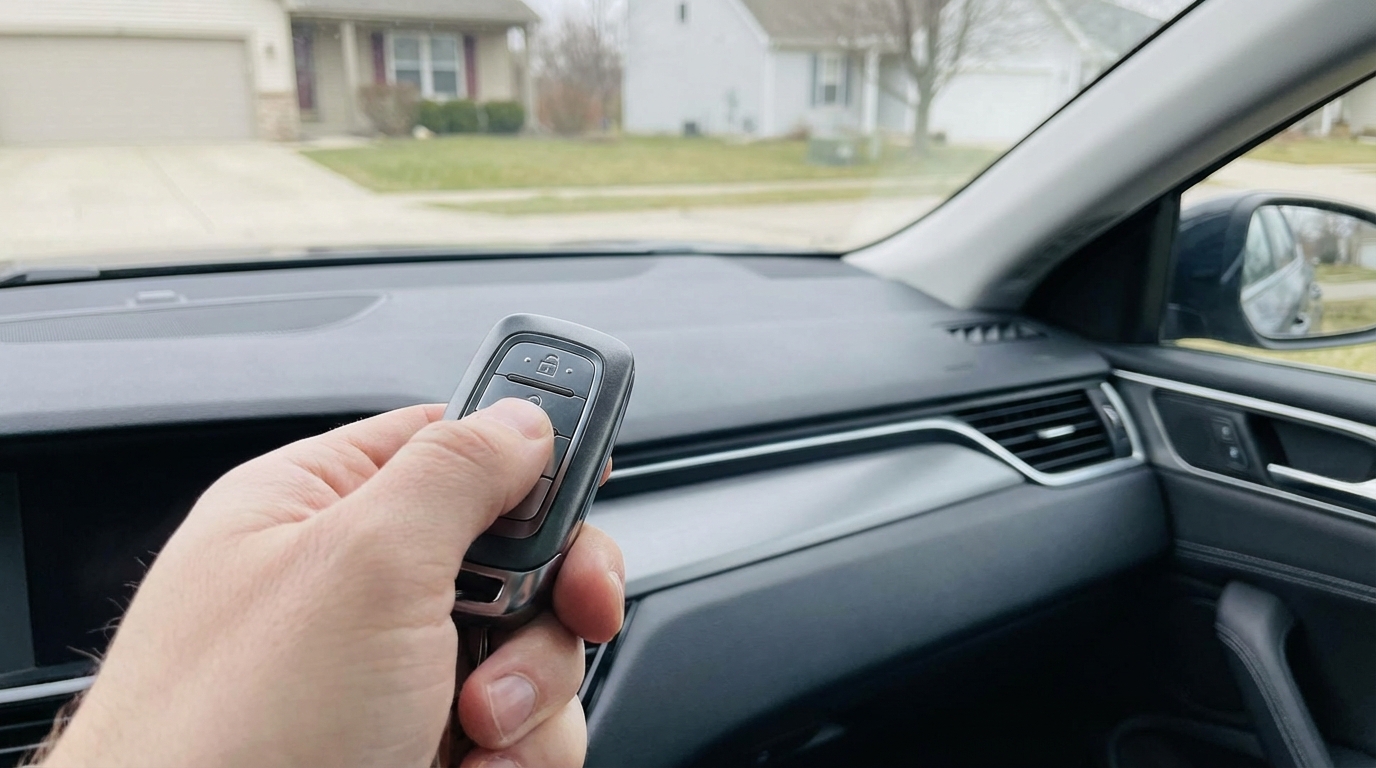
Most remotes use a CR2032 or CR2025 coin battery. You can pick these up at any grocery store. Pop the case open (usually with a dime or a small screwdriver), swap it out, and try again. It's the cheapest fix there is. Also, check the metal contacts inside the fob. Sometimes they get bent or dirty and just need a quick wipe.
2. The "Check Engine" Light is On
This is the one that surprises most people. If your vehicle has a Check Engine Light (CEL) illuminated on the dashboard, the remote start feature is almost always disabled automatically.
Why? Because the car's computer (the ECU) is smart. It knows something is wrong with the engine-could be an emissions leak, a misfire, or a sensor failure. Since there is no driver in the seat to watch the gauges or listen for weird noises, the computer decides it's unsafe to run the engine unattended. It simply refuses the command.
According to most owner's manuals (and mechanics I talk to), this is a "fail-safe" mode.
The silly part? The most common reason for a Check Engine Light is a loose gas cap. If you filled up yesterday and didn't click the cap tight enough, that might trigger an EVAP system error code. This turns on the light, which kills your remote start. Tighten the cap and drive for a day or two; the light might go off on its own, and your remote start will work again.
3. The Hood Pin Switch is Broken or Bent
This is a safety feature that exists on every legitimate remote start system, whether it is factory-installed by Ford or Toyota, or an aftermarket one like Viper.
Under your hood, there is a small plunger switch or a tilt sensor. Its job is to tell the car if the hood is open. This is vital for safety. Imagine a mechanic is working on your engine, hands deep in the belts and fans. If you accidentally sat on your key fob inside the house and the car started, that mechanic could be seriously injured.
So, if the hood is open, the car won't remote start.
The problem is that these switches get dirty, rusty, or bent over time. Sometimes the bracket holding the switch bends down, so when you close the hood, it doesn't push the button all the way down. The car thinks the hood is open even when it's closed. Locate the pin (usually along the fender edge under the hood), press it down with your finger, and have someone try to start the car. If it starts, you found the problem.
4. You Are in "Valet Mode"
This happens all the time with aftermarket systems (like Compustar, Viper, Avital). These systems have a "Valet Mode" designed for when you hand your keys to a parking attendant or mechanic. It disables the alarm and the remote start so they don't go off accidentally, but it allows the doors to lock and unlock.
You might have triggered this by accident. Usually, the tell-tale sign is your parking lights. On many systems, if the parking lights don't flash when you lock the car, or the LED on the antenna (usually on your windshield) stays solid blue or red instead of blinking, you are in Valet Mode.
How to fix it: It varies by brand.
- Sometimes you have to turn the key to "On" and tap the brake pedal.
- Sometimes you hold buttons on the remote (like Lock + Trunk) at the same time.
- Check your specific manual or Google "[Your Brand] exit valet mode."
5. Door Locks and Hazard Lights
Did you know most factory remote starts wont work if the car is unlocked? It's a security thing. The logic is that if the car starts while unlocked, someone could just hop in and drive away (even though most require a key to shift gears, manufacturers are extra cautious).
Before you press the start button, hit the LOCK button. Even if you think it's locked, hit it again. Then try the start sequence.
Also, check your hazard lights. If your hazards are flashing, many systems disable remote starting. I had a friend whose hazard switch was slightly stuck halfway, and it drove him crazy for weeks until he wiggled it.
6. You Hit the Start Limit
Car manufacturers and aftermarket companies don't want you idling the car forever. It wastes gas and isn't great for the environment.
Most systems have a limit on how many times you can remote start the vehicle in a row without physically getting in and turning the key. Usually, the limit is two times.
If you started it once to warm it up, let the 10-minute timer run out, then started it again, and let that run out... you can't start it a third time remotely. You have to go outside, put the key in the ignition (or press the push-to-start button), and cycle the engine. This resets the counter.
7. The Coolant Temperature Sensor
This is a bit more technical, but it happens on modern cars with advanced climate control. Some systems, especially on diesel trucks or high-end luxury cars, look at the engine temperature and the outside temperature.
If the engine is already hot, the car might decide, "I don't need to remote start," and cancel the request. Conversely, if it's extremely cold, some diesel trucks need a "Wait to Start" period for the glow plugs to warm up. If your remote start system isn't programmed to wait that extra 5-10 seconds, it will try to crank the engine too soon and fail.
8. The "Neutral Safety Switch"
Your car must be in Park to start. We all know that. But how does the car know it's in Park? There is a sensor called the Neutral Safety Switch.
If your gear shifter is sloppy or the cable is stretched, the car might physically be in Park, but the sensor thinks it's slightly in Reverse or Neutral. If the "P" light on your dashboard isn't illuminated, or if you have to wiggle the shifter to get the key out, this is probably your issue.
Next time it fails, try pushing the gear shift lever firmly forward into Park and trying again.
9. Lost Programming (The Battery Swap Issue)
Did you recently change your car battery? Or maybe the car battery died completely last week?
When the main vehicle battery dies, the computer resets. Sometimes, especially with aftermarket remote starters, the "brain" of the remote start system loses its memory or tachometer signal. The system forgets how to talk to your car.
If this happened, you usually have to reprogram the tachometer signal. This tells the remote start when the engine is running so it stops cranking the starter. The procedure is different for every car, but it usually involves starting the car with the key, holding a button on the remote start antenna, and waiting for a flash.
Troubleshooting Steps: What You Should Do Now
Okay, so we covered the why. Here is exactly what I would do if I were standing in your driveway right now trying to fix this.
Step 1: The "Second Key" Test
Do you have a spare key fob? Try that one. If the spare works, you know your main fob is broken or has a dead battery. If neither works, the problem is with the car, not the remote.
Step 2: Check the Dashboard
Go start the car manually. Look at the dash. Is the Check Engine Light on? Is the "Door Ajar" light on? Is the TPMS (tire pressure) light on? Fix those warning lights first.
Step 3: Listen to the Car
Stand outside near the car and press the remote start buttons. Listen closely.
- Do you hear clicking? If you hear the relays clicking but the starter doesn't turn, your car battery might be too weak to crank the engine, even if it runs the radio.
- Does it crank but not start? This could be an immobilizer issue (the car isn't recognizing the security chip) or a fuel issue.
- Does it start and immediately shut off? This is usually a tachometer issue (the system doesn't know the car is running) or an alarm conflict.
Step 4: The Toggle Switch (Aftermarket Only)
If you have a Viper, Clifford, or Python system, look under your dashboard near the driver's knees. There is often a small toggle switch installed there. That is the manual kill switch for the remote start. If you kicked it with your shin getting out of the car, you turned the system off. Flip it back and see what happens.
When to Call a Pro
Look, I love DIY fixes, but remote starters involve cutting into ignition wires and bypassing security immobilizers. It gets messy fast.
If you have checked the battery, the hood pin, and the dashboard lights, and it still doesn't work, it might be a hardware failure. The "brain" box of the remote start can burn out. Ground wires can rust and come loose. If you have an aftermarket system, take it back to the shop that installed it. They usually have a lifetime warranty on the labor/module. If it's a factory system, you unfortunately might have to visit the dealership.
Frequently Asked Questions
Can cold weather stop my remote start from working?
Indirectly, yes. Extreme cold kills car batteries. If your car battery voltage drops below a certain threshold (usually around 11.5 or 12 volts), the remote start system won't attempt to start the engine to save what little power is left. It basically sacrifices itself so you might still be able to start the car with the key.
Does the Check Engine Light really disable remote start?
Yes, on almost all modern vehicles (2010 and newer usually). It is a liability issue for the manufacturer. They don't want the engine running without supervision if the computer detects a mechanical fault. Fix the engine code, and the remote start will come back.
Why do my parking lights flash when I try to start it?
The flashing lights are actually an error code! If you have an aftermarket system (like Compustar), the number of flashes tells you what is wrong.
- 3 Flashes: Valet Mode.
- 7 Flashes: Manual transmission mode error.
- Check your specific manual for the "Diagnostic Error Codes." It’s like the car is trying to talk to you in Morse code.
Can I reset my remote start myself?
You can try a "power cycle." Disconnect the negative terminal of your car battery for about 15 minutes. This resets the vehicle's ECU and the remote start module. Just be warned: this will also reset your radio presets and clock. Reconnect it and see if the glitch clears.
Why does my car shut off as soon as I open the door?
This is actually a feature, not a bug, especially on Toyota and Lexus vehicles. It is called "Secure Takeover." Some manufacturers decided that the safest way to prevent theft is to kill the engine as soon as a door opens, forcing you to restart it with the actual key or fob inside the vehicle. It's annoying, but it's working as designed.