
Key Takeaways
- The Safety Feature: Your remote start isn't broken. The car's computer (ECU) disabled it intentionally because the Check Engine Light is on. It's a safety precaution.
- Most Common Fix: Check your gas cap. A loose gas cap triggers an emissions error (EVAP code) which turns on the light and kills the remote start.
- The Solution: You have to fix the issue causing the engine light and then clear the code. Once the light is off, remote start works again immediately.
- Don't Ignore It: While it's usually minor, running the engine with a warning light could cause damage since you aren't sitting in the driver's seat to monitor gauges.
Why Your Car Won't Remote Start When the Check Engine Light Is On
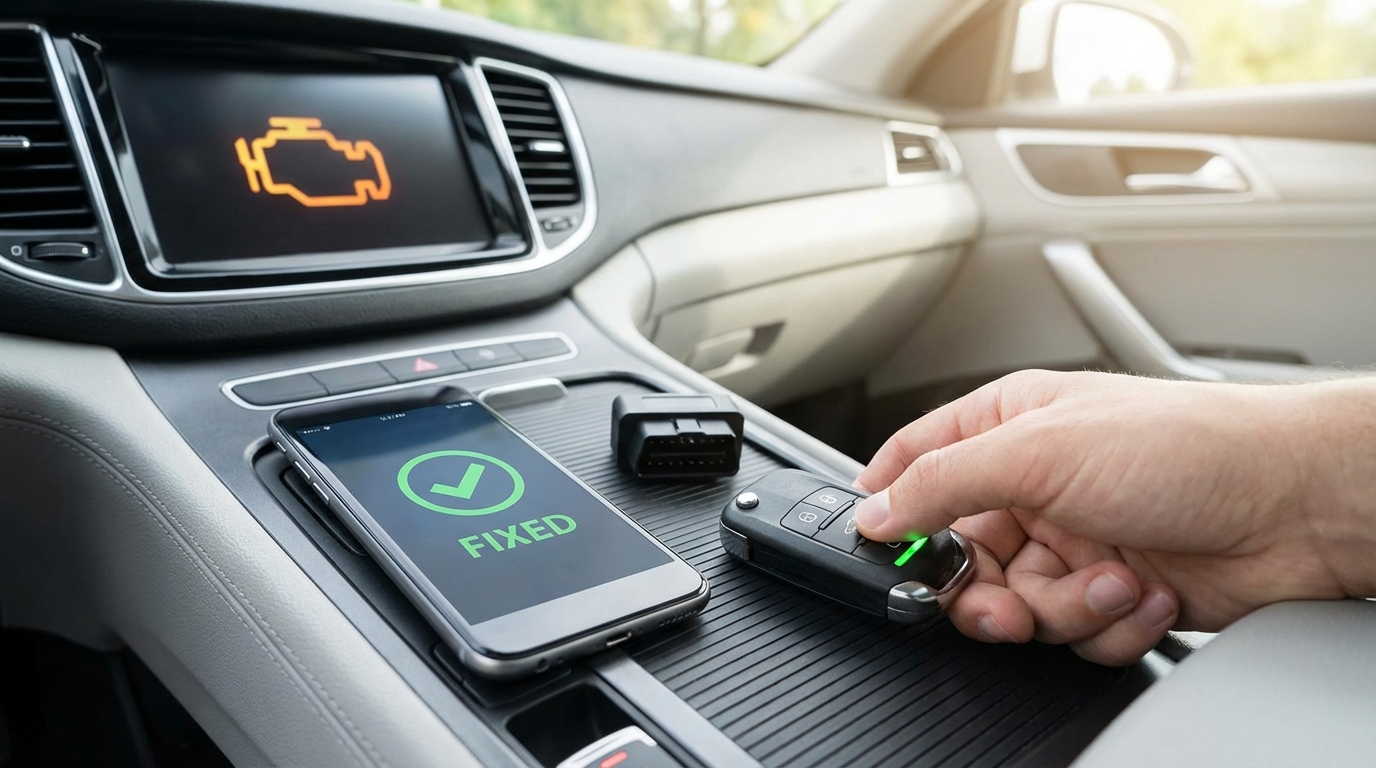
Here is the short answer: Your car is in "fail-safe" mode. Most modern vehicles-especially Chevy, Ford, Toyota, and Honda-are programmed to disable the remote start feature the second the Check Engine Light (CEL) pops on.
Why? Because the car doesn't know if the problem is a loose gas cap or a melting piston. Since you aren't sitting in the driver's seat to watch the oil pressure or temperature gauge, the computer decides it's safer to not let the engine run without a human present. It is annoying, I know, especially when it's freezing outside, but it's actually trying to save your engine.
So, stop worrying that your key fob is dead or the starter motor is busted. If that orange engine light is on the dash, that is 100% why your remote start isn't working.
The First Thing You Must Check: The Gas Cap
Before you go to a mechanic and spend $150 on a diagnostic fee, go outside and check your gas cap. Seriously, do it right now.
According to data from repair shops and automotive forums, a loose or faulty gas cap is one of the most common reasons for a Check Engine Light. Here is the deal: your car has an Evaporative Emission Control System (EVAP). It keeps gas fumes from escaping into the atmosphere. The system is pressurized.
If the cap is loose, the system loses pressure. The computer senses a "leak," turns on the Check Engine Light, and boom-remote start disabled.
How to fix it:
- Open the fuel door.
- Take the cap off.
- Check the rubber seal on the cap. Is it cracked? If yes, buy a new one for $15 at an auto parts store.
- If the seal looks good, put it back on and turn it until it clicks at least 3 times.
Note: The light won't go off immediately. You usually have to drive the car for 50-100 miles or through several "drive cycles" (turning the car on and off) for the computer to re-check the system and realize the leak is gone.
How to Scan and Clear the Codes (For Free)
If the gas cap wasn't the issue, you need to find out what code the computer is throwing. You don't need to be a mechanic to do this.
In the old days, you had to count blinking lights on the dash. Now, we have OBDII (On-Board Diagnostics). It's a port usually located under your steering wheel.
Option A: Go to an Auto Parts Store
Places like AutoZone, O'Reilly's, or Advance Auto Parts will scan your car for free. Just walk in and ask to borrow their scanner. They plug it in, and it gives a code (like P0420 or P0455). They can print out a slip that tells you exactly what that code means. It saves a ton of guessing.
Option B: Buy a Cheap Scanner
You can buy a basic OBDII scanner on Amazon for like $20. It's a great tool to keep in the glovebox. If you have one, here is how you use it:
- Plug the scanner into the port under the dash (usually near your left knee).
- Turn the key to the "On" position (don't start the engine, just power up the electronics).
- Press "Read" or "Scan" on the tool.
- Write down the code.
Once you know the code, you can Google it (e.g., "Chevy Silverado P0440 code") to see how serious it is. If it's something minor, you can use the scanner to Erase/Clear the codes. Once the code is cleared and the light turns off on the dashboard, try your remote start. It should work instantly.
Common Codes That Kill Remote Start
Not all engine codes are created equal. Some are scary, some are basically nonsense sensors acting up. Here are the usual suspects that I see all the time.
1. P0440 / P0442 / P0455 (EVAP System)
We talked about this with the gas cap. These codes mean there is a leak in the fuel vapor system. Aside from the gas cap, it could be a "purge valve" or a "vent solenoid." These parts are usually cheap and easy to swap out yourself if you're handy with a screwdriver.
2. P0300 - P0308 (Misfires)
This means one of your cylinders isn't firing correctly. It could be a bad spark plug or ignition coil. Since a misfire can damage the catalytic converter if the engine runs too long, the computer definitely disables remote start for this one. You don't want a misfiring car idling in your driveway for 10 minutes.
3. P0420 (Catalytic Converter)
This is the dreaded code. It usually means your catalytic converter isn't working efficiently. This is an expensive fix, unfortunately. However, sometimes it's just a bad Oxygen (O2) sensor giving a false reading. Changing an O2 sensor is way cheaper than a new converter.
4. P0128 (Coolant Thermostat)
This one is interesting. It means your engine isn't heating up fast enough. Since remote start is often used to warm up the car, and the car knows it can't warm up properly, it disables the feature. It's usually a stuck-open thermostat. cheap part, but can be a pain to install depending on the car.
What If The Check Engine Light ISN'T On?
Okay, so what if your remote start isn't working, but your dashboard is clear? No warning lights at all. That is a different beast.
If you press the button and the lights flash but the engine doesn't crank, check these things:
The Hood Pin Switch
This is a major culprit. There is a safety switch under your hood that tells the car if the hood is open. Mechanics rely on this so the engine doesn't remote start while their hands are near the fan belt.
Over time, this switch gets bent, rusted, or dirty. If the switch thinks the hood is open (even when it's closed), remote start is disabled. Locate the switch (usually near the hood latch), clean it, and make sure it's pressing down when the hood shuts.
Key Fob Battery
It sounds stupid, but is the battery in your remote dying? Sometimes it has enough power to unlock the doors (which takes one quick signal) but struggles with the "long press" or sequence needed for remote start. Swap the CR2032 battery and try again.
Valet Mode
Some cars and aftermarket systems (like Viper or Compustar) have a "Valet Mode." This is a setting used when you hand your keys to a parking attendant so they don't accidentally arm the alarm. Valet mode often disables remote start. Check your owner's manual on how to exit Valet mode-usually, it involves turning the key and tapping the brake pedal in a specific pattern.
Battery Voltage
If your car battery is weak, the car’s computer goes into power preservation mode. It will prioritize starting the car with the key over the remote system. If your battery is 3 or 4 years old, have it tested. Cold weather kills batteries, which is ironic because that's exactly when you want to use remote start.
Factory vs. Aftermarket Systems
There is a slight difference here depending on what you have installed.
Factory Systems (OEM): If your remote start came with the car (Ford, GM, Toyota, etc.), it is integrated deeply into the ECU (Engine Control Unit). These systems are extremely strict. Almost any check engine light will disable them. They are designed for maximum liability protection for the manufacturer.
Aftermarket Systems: If you went to a car audio shop and had a Viper, Python, or Compustar system installed, these act a little differently. They might not communicate with the engine computer as deeply. Some older aftermarket systems will remote start even if the check engine light is on, because they bypass the car's main logic. However, newer aftermarket systems that use a "data bypass module" read the car's status and will often obey the same rules-if the car says "Error," the remote start says "No."
Can I Just Disconnect the Battery to Fix It?
I hear this trick all the time. "Just disconnect the negative battery terminal for 10 minutes to reset the computer."
Does it work? sort of. It will clear the code and turn off the check engine light temporarily. This might allow you to remote start the car once or twice.
But here's the problem: You didn't fix the broken part. As soon as you drive the car and the sensors pick up the error again (which might take 10 miles or 10 minutes), the light comes back on, and your remote start stops working again. Plus, disconnecting the battery resets your radio presets, your clock, and sometimes your idle relearn strategy, which makes the car drive funny for a day. It's better to use a scanner to clear the code properly.
When To Call a Pro
I'm a big fan of DIY, but sometimes you gotta know when to fold 'em. You should take the car to a mechanic if:
- The Light Flashes: If the Check Engine Light is blinking, that means a severe misfire is happening right now. Do not drive it. Tow it.
- Electrical Gremlins: If you clear the code and it comes back instantly, or if you have multiple weird electrical issues (door locks failing, radio flickering), it might be a wiring issue or a bad Body Control Module (BCM). That is a nightmare to diagnose without expensive tools.
- You Smell Gas: If you have an EVAP code and you actually smell raw fuel, you have a real leak. That's a fire hazard. Get it checked.
Preventative Maintenance Tips
To keep your remote start working all winter, you need to keep that engine light off. It sounds obvious, but regular maintenance is the key.
- Tighten the gas cap every time. Make it a habit.
- Change your oil on time. Old oil can trigger variable valve timing codes.
- Change air filters. A dirty filter messes with the Mass Air Flow sensor.
- Use good gas. sometimes cheap gas has weird additives that trigger sensor warnings.
Conclusion
Look, I know it's frustrating. You pay good money for a car with remote start, and the one morning it's 10 degrees outside, it refuses to work. It feels like the car is betraying you.
But remember, the car is just trying to protect itself. The "fix" isn't a hack or a bypass; it's simply addressing the health of your engine. Start with the gas cap, get the codes scanned for free at a parts store, and go from there. 9 times out of 10, it's a $20 sensor or a loose cap standing between you and a warm car.
Good luck getting it sorted, and stay warm!
Frequently Asked Questions
Does the Check Engine Light always disable remote start?
On almost all modern vehicles (2010 and newer), yes. Manufacturers link these systems for safety. If the computer detects an engine anomaly, it refuses to let the engine run unattended.
Will clearing the code fix the remote start permanently?
Only if you fixed the problem that caused the code. If you just clear the code with a scanner but don't replace the bad part (like the O2 sensor or gas cap), the light will come back on after a few miles of driving, and the remote start will stop working again.
Can I bypass the sensor to make remote start work anyway?
Technically, anything is possible with enough wiring knowledge, but I highly recommend against it. Bypassing safety checks means your car could overheat, run out of oil, or misfire severely while sitting in your driveway, and you wouldn't know until the engine is ruined.
My Check Engine Light is off, but remote start still doesn't work. Why?
Check your hood latch switch (hood pin). If the car thinks the hood is open, it won't start. Also, check your key fob battery and your actual car battery. If the car is in "Battery Saver Mode," it disables non-essential features like remote start.
How much does it cost to fix this?
If it's a loose gas cap? $0 to $15. If it's an O2 sensor? Maybe $100-$200. If it's a catalytic converter? That could be over $1,000. It all depends on what code triggered the light. Scanning the code is the only way to know the price.