
Key Takeaways
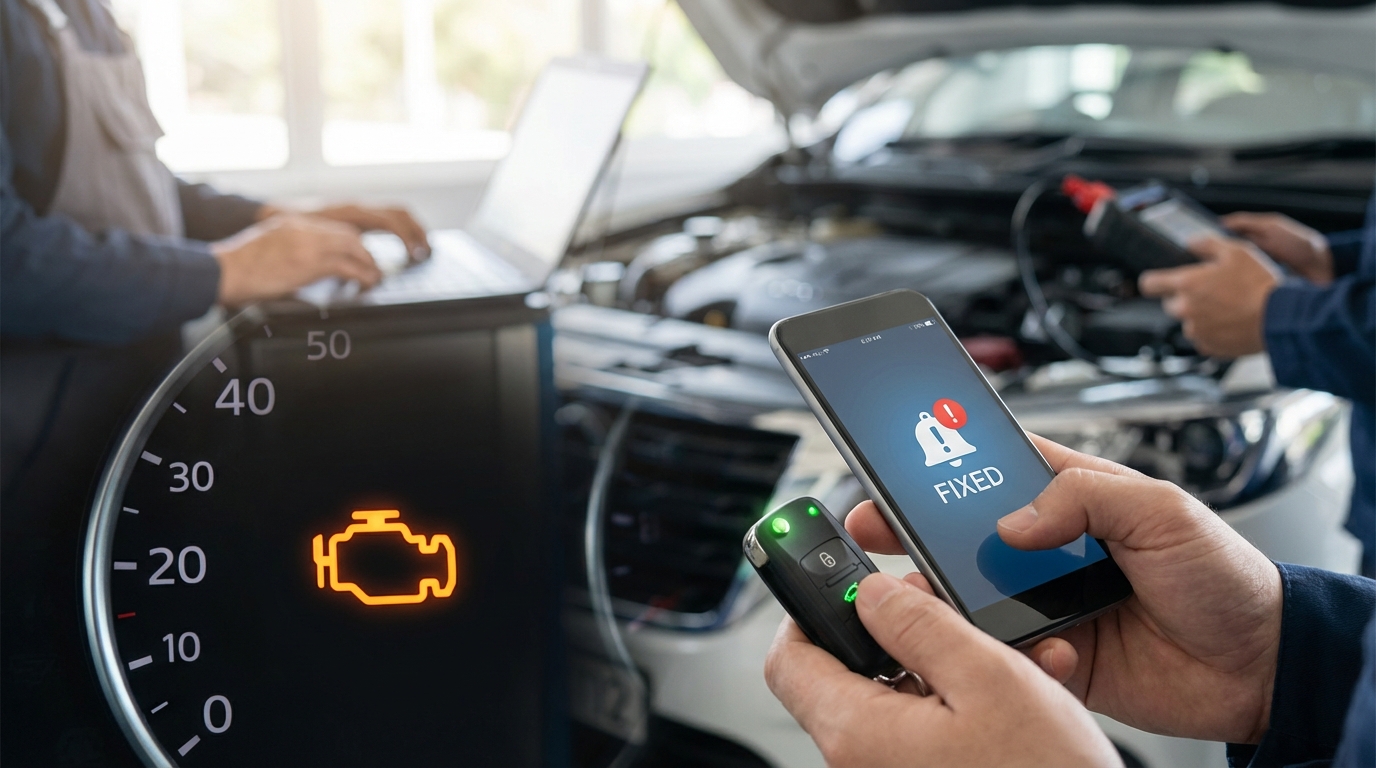
- The Short Answer: Your remote start is disabled because the Check Engine Light (CEL) is on. This is a safety feature programmed by the manufacturer to prevent engine damage.
- The Quickest Fix: Check your gas cap. A loose gas cap triggers the light and kills remote start. Tighten it and drive for a few days.
- The Real Fix: You need to scan the car for OBDII codes. You can’t use remote start again untill the codes are cleared or the issue is fixed.
- Don't Panic: Most of the time, it's an emissions sensor or a minor vacuum leak, not a blown engine.
- Aftermarket Systems: If you have a Viper or Compustar remote start, the issue might be a "Valet Mode" or a broken hood pin switch, rather than the engine light.
Why Your Car Won't Remote Start with the Engine Light On
Here is the deal. You press the button on your key fob, the lights maybe flash once, but the engine doesn't crank. And when you get in and start it manually, that annoying orange engine light is glowing on the dash.
The system is actually doing exactly what it was designed to do. This isn't a glitch.
Most modern vehicles-especially from GM (Chevy, GMC), Ford, Toyota, and Honda-have a fail-safe built into the computer (the ECU). When the computer detects a problem that triggers the Check Engine Light, it automatically disables the remote start feature. The logic is pretty simple: since you aren't physically in the car to watch the gauges or hear if the engine sounds like a bag of marbles, the car refuses to start to protect itself.
Think of it this way. If your car had low oil pressure or was overheating, and you remote started it from your kitchen while it ran for 10 minutes, you could destroy the engine. The computer doesn't know if the engine light is on for a loose gas cap or a major misfire, so it plays it safe and just says "no."
The "Limp Mode" Connection
You might have heard of "Limp Mode." This is when a car limits its speed to prevent damage. Disabling the remote start is a similar preventative measure. According to most owner's manuals, remote start is considered a luxury convenience feature, not a critical operation, so it's the first thing to get cut when the system senses trouble.
Step 1: Check the Gas Cap (Do This First)
I cannot tell you how many times this is the problem. It sounds stupid, but it's true.
If you recently got gas and didn't click the cap until it stopped, or if the rubber seal on the cap is getting old and crusty, your car detects a "vapor leak." The car thinks fuel vapors are escaping into the atmosphere. This triggers an EVAP system code (usually P0440 or P0455) and turns on the Check Engine Light.
The Fix: Go out to the car, take the gas cap off, and put it back on. Turn it until it clicks at least 3 times. Then, you usually have to drive the car for a few cycles (start, drive, turn off) before the light resets itself. If the light goes off, your remote start will start working again instantly.
Step 2: Read the Codes
If the gas cap trick didn't work you need to know why the light is on. You don't need to go to a mechanic and pay $100 for this. You have two better options.
Option A: Go to an Auto Parts Store
Places like AutoZone, O'Reilly's, or Advanced Auto Parts will scan your car for free. Just walk in and ask. They plug a little computer into the port under your steering wheel and give you a printout.
Option B: Buy a Cheap Scanner
Honestly, you should just own one of these. You can buy a basic OBDII scanner on Amazon for like $20. It pays for itself the first time you use it.
Once you have the scanner plugged in, it will give you a code like P0301 or P0420. This code is the key to getting your remote start back.
Common Codes That Kill Remote Start
While pretty much any check engine code will disable the remote start on factory systems, these are the most common offenders I see:
- P0442 / P0455 (EVAP Leaks): This is the gas cap or a leak in the fuel vapor lines. It's an emissions thing. It wont hurt the car to drive it, but it kills the remote start.
- P0300 - P0308 (Misfires): This means one of your cylinders isn't firing right. Could be a bad spark plug or coil pack. The car definitely disables remote start for this because unburnt fuel can ruin the catalytic converter.
- P0128 (Coolant Thermostat): This means your engine isn't getting up to temperature fast enough. Since remote start is often used to warm up the car, the computer disables it because it knows the heater won't work right anyway.
- P0420 (Catalytic Converter): This usually means your "cat" is wearing out. It's expensive to fix, but very common on older cars.
How to Clear the Light (And Temporarily Fix Remote Start)
If you just want your remote start back for the cold morning tomorrow and you don't have time to fix the actual part yet, you can try clearing the codes.
Warning: This is temporary. If the problem is real, the light will come back on (sometimes in 10 miles, sometimes in 100 miles) and remote start will stop working again.
- Using a Scanner: Plug in your OBDII scanner. Select "Erase Codes" or "Clear Codes." The check engine light will turn off on the dash. Try your remote start-it should work immediately.
- The Battery Method (The "Hard Reset"): If you don't have a scanner, pop the hood. Disconnect the negative (black) battery terminal. Leave it off for about 15 minutes. Maybe hit the brake pedal a few times to drain any residual power. Hook it back up.
Note on the Battery Method: This resets the computer, but it also resets your radio presets and clock. And on some newer cars, it messes with the idle learning, so the car might run rough for the first 10 minutes of driving. Its not the best way, but it works in a pinch.
What If the Engine Light ISN'T On?
Okay, so what if your remote start isn't working, but there is no check engine light on the dashboard? That is a different beast. Here are the likely culprits.
1. The Hood Pin Switch
This is probably the number one cause for non-CEL related failures. There is a safety switch under your hood that tells the car if the hood is open. This is so the remote start doesn't turn on while a mechanic has his hands inside the engine belt.
If this switch gets bent, rusty, or disconnected, the car thinks the hood is open 24/7. It will absolutely refuse to remote start. On some cars, you might see a "Hood Open" warning on the dash, but on others, you get no warning at all.
Check it: Look for a little rubber plunger near the radiator support or along the fender inside the engine bay. Make sure it moves up and down freely.
2. Key Fob Battery
Sometimes the simplest answer is the right one. If the battery in your fob is weak, it might have enough juice to unlock the doors (which is a simple signal) but struggle to send the continuous long-press signal needed for remote start. Swap the CR2032 battery and see what happens.
3. Door Ajar or Trunk Open
Most systems won't start if a door is unlocked or ajar. Make sure all your doors are slammed shut and the trunk is latched tight.
4. Valet Mode (Aftermarket Systems)
If you have a Viper, Clifford, or Compustar system added to your car, you might have accidentally put it in "Valet Mode." This mode disables remote start so a parking valet doesn't accidentally trigger it.
Usually, the LED light on your antenna (on the windshield) will flash a specific pattern if Valet Mode is on. To fix this, you typically turn the key to the "On" position and tap the valet button (usually hidden under the dash) a certain number of times. You'll have to Google your specific alarm model for the sequence.
Factory vs. Aftermarket: The Differences
It's important to know which system you have because they behave differently regarding the engine light.
Factory Systems (OEM): These are integrated deeply into the car's ECU. They are strictly governed by the Check Engine Light. If the light is on, 99% of the time, remote start is dead. Brands like Ford and GM are very strict about this.
Aftermarket Systems: These systems are wired into the ignition wires manually. Interestingly, many older aftermarket systems will still start the car even if the engine light is on. They aren't always smart enough to read the OBDII error codes. However, newer aftermarket systems that use a "data module" (like an iDatalink Maestro) read the car's computer status and will respect the safety protocol and shut down if the CEL is on.
The Cost to Fix
You're probably wondering how much this is gonna cost you. Here is a rough breakdown assuming the Engine Light is the culprit:
- Gas Cap: $15 - $30. Easy DIY.
- Thermostat (P0128): $150 - $300 at a shop. The part is cheap, but labor can be annoying depending on where it's buried.
- O2 Sensor: $200 - $400. There are usually multiple sensors.
- Evap Purge Valve: $100 - $200. Common on Fords and Hyundais.
- Catalytic Converter: $1000+. This is the painful one.
Can I Bypass the Engine Light Requirement?
I get asked this a lot. "Can I just cut a wire to make it ignore the engine light?"
The short answer is no, not on a factory system. The logic is hard-coded into the Body Control Module (BCM) or the ECU. You can't rewire it because it's software, not hardware.
The only workaround is to fix the problem causing the light, or keep clearing the codes every few days with a scanner. There are "tuners" (people who hack car computers for performance) who can program the check engine light out of existence, but that voids warranties and is illegal in many states because of emissions laws. I wouldn't recommend going down that road just to get your heater working faster.
Summary Checklist to Fix It Today
- Verify the Check Engine Light is actually on.
- Check your gas cap. Tighten it.
- Check that your hood is fully closed and no "Hood Open" warning is on the dash.
- Get the codes scanned (AutoZone or buy a scanner).
- If the code is minor (like EVAP), clear the code with the scanner.
- Test remote start immediately.
- Plan to fix the actual part so the light doesn't come back.
Hopefully, this helps you warm up your car again. It's super frustrating when technology tries to protect us a little too much, but at least now you know the car isn't broken-broken, it's just being cautious.
Frequently Asked Questions
Q: Will my remote start work if the tire pressure light is on?
A: Yes, usually. The Tire Pressure Monitoring System (TPMS) is separate from the engine management. A low tire light usually does not disable remote start, although some very new high-end cars might be picky about it.
Q: I cleared the code and remote start worked, but the light came back the next day. Why?
A: Because you didn't fix the problem, you just deleted the notification. The car ran its self-test, found the same broken part or leak, and turned the light back on. You have to replace the faulty part to fix it permanently.
Q: Can I install an aftermarket remote start to get around this?
A: Maybe. If you install a cheap, "dumb" remote start that just hot-wires the ignition, it might ignore the engine light. But installing those on modern cars is difficult and can mess up other electronics. It's usually cheaper to just fix the O2 sensor or whatever is causing the light.
Q: Does the "Change Oil" light affect remote start?
A: Typically, no. The maintenance reminder light is different from the Check Engine Light. However, if you let the oil level get dangerously low and the "Low Oil Pressure" warning comes on, the car will definitely disable remote start to save the engine.
Q: My remote start flashes the lights but doesn't start. What does that mean?
A: Count the flashes! Most manufacturers have a code. For example, on a Chevy, one flash might mean "Remote Start Disabled," and on a Ford, a specific honk or flash pattern might mean "Hood Open." Check your owner's manual for the "Remote Start Diagnostics" section.