
Key Takeaways: Quick Fixes
- Valet Mode is usually the culprit: If your parking lights flash but the car doesn't start, or the LED on the antenna is solid, you are likely in Valet Mode.
- Check the remote battery: A weak CR2032 battery can light up the fob LED but fail to send a strong signal to the car.
- The Hood Pin Switch: If this safety switch is bent or rusty, the car thinks the hood is open and refuses to start.
- Brake Pedal Switch: If your brake lights are stuck on or the switch is faulty, the system shuts down for safety.
- Toggle the Switch: Look for a physical toggle switch under the dash; sometimes it just gets kicked into the "Off" position.
The Short Answer: Why Your Python Remote Start Isn't Working
If you press the button and nothing happens, or the lights flash but the engine doesn't crank, check if you are in Valet Mode. This is the number one reason these systems stop working out of nowhere. To fix this, open your driver's door, turn the key to the "On" position (don't start the engine), and press the Valet/Program button (usually hidden under the dash) once. Then turn the key off. The LED light on your dashboard or antenna should turn off. Try the remote again. If that didn't work, swap the battery in your key fob.
Now, if those two easy fixes didn't do the trick, we gotta dig a little deeper. Grab a coffee and let's troubleshoot this together, because nobody likes getting into a freezing cold car.
1. The "Valet Mode" Trap
I can't tell you how many times friends have called me saying their remote starter is broken, only to find out they accidentally put it in Valet Mode. It's actually a safety feature. According to the manual from Directed Electronics (the folks who make Python, Viper, and Clifford), Valet Mode is designed to stop the engine from remote starting while a mechanic is working on it. You definitely don't want the engine roaring to life while someone has their hands on the fan belt.
How do you know it's in Valet Mode?
Look at the remote start antenna, usually stuck to your windshield behind the rear-view mirror. Is the little blue (or red) light on solid? Not flashing, but just staying on? That means Valet Mode is active. Also, if you press the start button on your fob and the parking lights flash but nothing happens, that's another sign.
How to turn it off:
There are two main ways to exit this mode, depending on how your installer set it up.
- The Button Method: Most Python systems have a small push-button switch drilled into the kick panel (near your feet) or zip-tied under the dash.
- Open the driver's door.
- Turn the ignition to "Run" or "On".
- Within 10 seconds, press and release the Valet switch/button one time.
- Turn the ignition off. The LED light should go out.
- The Remote Method: Some newer Python 2-way remotes let you do this from the fob. Usually, you have to hit a combination of the 'Function' (F) button and the unlock/lock buttons. You might have to check the specific manual for your model number here, cause it varies a lot.
2. The Remote Battery (Even if the Light Works)
This catches people off guard all the time. You press the button, the little light on the remote flashes, so you assume the battery is fine. Not necessarily.
Remote starters need a strong burst of RF energy to reach the car. A dying battery might have enough juice to light up a tiny low-power LED on your keychain, but not enough power to scream a signal through your house walls and out to the driveway. If you haven't changed the battery in over a year, just do it. It costs like five bucks.
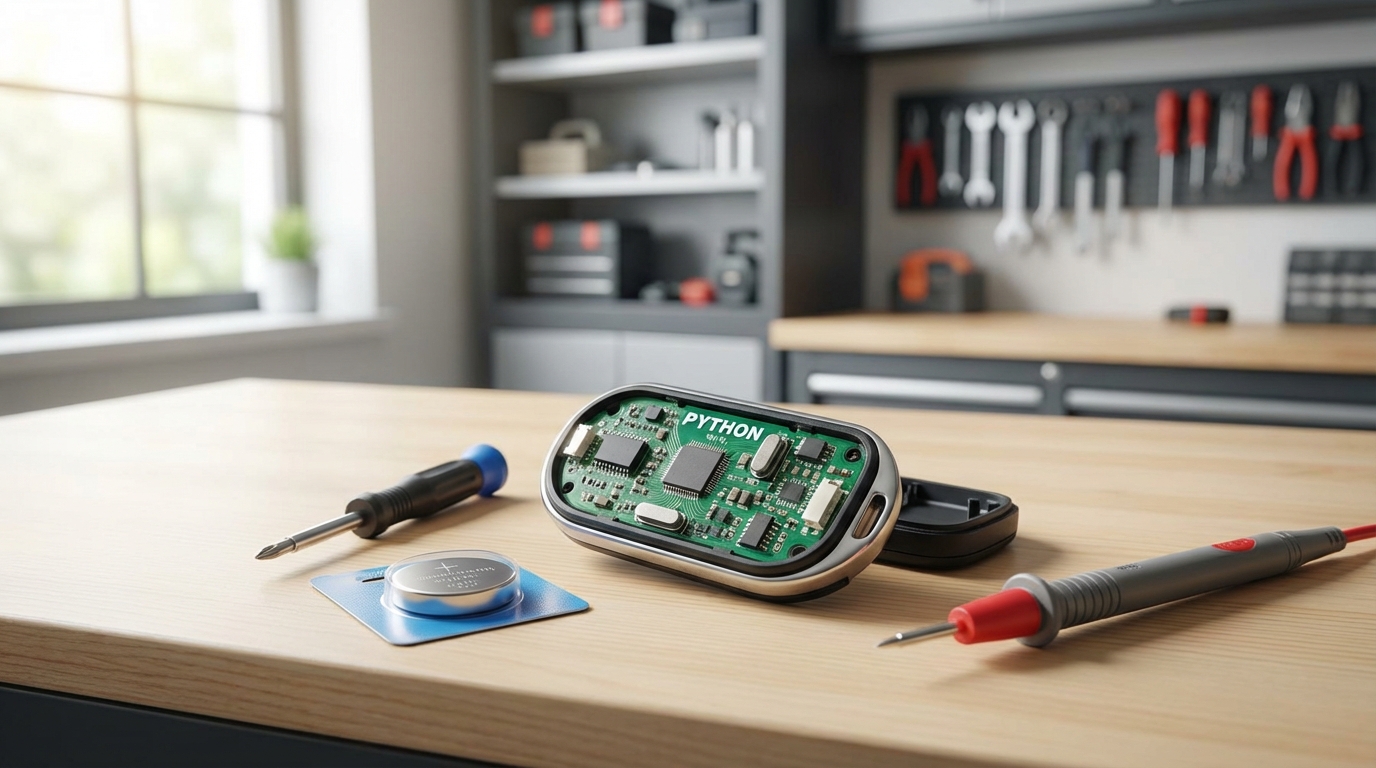
Most Python remotes use CR2032 coin batteries. You can get them at any drugstore. Just use a dime to pry the case open carefully. Be gentle with the plastic clips, they snap pretty easy if you force them. Also, make sure the metal contacts inside aren't corroded. If they look green or crusty, scrape them gently with a bit of sandpaper or a rough cloth.
3. The Hood Pin Switch (The Silent Killer)
This is probably the most annoying mechanical failure point. Your remote starter has a safety feature called a "Hood Pin Switch." It's a plunger-style switch under the hood of your car. When the hood is closed, the switch is pressed down. When the hood opens, the switch pops up and grounds the circuit.
The logic is simple: If the hood is open, the car assumes someone is working on the engine, so it disables the remote start to prevent injuries.
The problem: Under the hood is a dirty, wet, hot environment. After a few years, these switches get rusty or bent. If the bracket bends down, the hood might not push the button down far enough. The car thinks the hood is open even when it's closed. result? The remote starter refuses to fire.
How to test it:
Find the switch (it looks like a little plunger, usually along the fender wall). Press it down with your finger while a friend tries to remote start the car (make sure your hands are clear of the engine belts!). If the car starts while you are holding the button down, you found your problem.
You can try cleaning the rust off with some WD-40 and a wire brush, or just bend the bracket up a little so the hood hits it harder. Honestly, replacements are cheap if you just want to swap it out.
4. Decode the Flashing Lights
Your Python system is actually pretty smart. When it fails to start, it usually tries to tell you why. It does this by flashing the parking lights a specific number of times after the failed attempt.
You usually need to try to start it, let it fail, and then count the flashes. Here is the standard breakdown for Directed Electronics (Python) systems, though it can vary slightly by model:
- 5 Flashes: The system detects the brake pedal is being pressed. This could be a faulty brake switch (check if your brake lights are staying on even when the car is off).
- 6 Flashes: Hood Pin switch. As we discussed above, the system thinks the hood is open.
- 7 Flashes: Manual Transmission Mode or Neutral Safety Switch. If you drive a stick shift, the setup sequence wasn't done right. If it's an automatic, the neutral safety wire might be loose.
- 8 Flashes: Neutral Safety Shutdown. Similar to the above, usually means the toggle switch is OFF or no neutral signal is detected.
Watching these lights can save you hours of guessing. If you see 6 flashes, stop messing with your remote battery and go check under the hood.
5. The Toggle Switch
Okay, this one is kinda embarrassing if you miss it, but it happens to the best of us. Many installers put a master "On/Off" toggle switch somewhere hidden. It’s different from the momentary Valet button.
This is a literal flip switch. It cuts power to the remote start brain. It’s usually located:
- Under the dash near the steering column.
- On the kick panel near your left foot.
- Sometimes inside the glove box.
If you take your car to a car wash or for an oil change, sometimes the workers hit this switch with their knee or foot by accident. If the switch is flipped to "Off," the remote start is dead. Flip it back and you're good to go.
6. Your Car Battery is Too Weak
Winter is when we use remote starters the most, right? Well, winter is also when car batteries die. Cold weather slows down the chemical reaction inside the battery.
When you sit in the car and turn the key, the car might start because you are controlling the crank time. But a remote starter monitors the voltage. If the voltage drops too low when it tries to start, the Python brain might abort the start to protect itself and the vehicle electronics.
If your car sounds sluggish when you start it with the key, your remote starter might just be giving up because the battery is too weak to sustain the crank. Check the date on your car battery. If it's more than 3 or 4 years old, it might be time for a new one.
7. Lost Programming
Electronics can be glitchy. Sometimes, if your car battery died completely or you disconnected it to do some work, the Python brain gets confused. It might "forget" the code from your remote.
Reprogramming the Remote:
This is a bit technical and varies a lot by model (like the Python 5706P vs the 4806P), but the general sequence for many Directed systems is:
- Open a door.
- Turn the key to ON.
- Press and release the Valet button once, then press and hold it.
- While holding the Valet button, press the Lock button on your remote.
- The siren should chirp to confirm it learned the remote.
- Release the Valet button and turn the key off.
If you try this and the siren never chirps, your remote might be broken, or the antenna cable (the wire running from the windshield to under the dash) might have wiggled loose. I’ve seen that happen on bumpy roads. The plug just falls out of the main unit.
8. Tachometer Mode Issues
This is for the more advanced DIYers. Your remote starter needs to know when the engine is actually running so it can stop cranking the starter motor. It usually does this by reading the engine's RPM (Tachometer signal) or by monitoring voltage (Virtual Tach).
If the system loses its "Tach Learn" setting, it might crank for a split second and stop, or crank way too long. If your car attempts to start, fires up for one second, and then shuts down immediately, this is usually a Tach issue.
You may need to "Re-learn" the tachometer. For many Python systems, you start the car with the key, let it idle down to normal RPM, and then press and hold the Valet button until the LED lights up solid. This tells the system, "Hey, this is what the engine sounds like when it's running."
9. Check the Brake Lights
This is a rare one, but I’ve seen it happen. The remote starter is wired into your brake pedal. This is a safety kill switch. If you step on the brake without the key in the ignition, the engine dies. This prevents someone from smashing your window, jumping in while the car is remote started, and driving off.
If you have a blown tail light bulb or a bad brake switch, it can feed back weird voltage into the system. If the Python brain thinks the brake is being pressed, it will never let the car start. Have a friend stand behind the car and verify your brake lights work normally.
10. The Antenna Cable
The antenna on your windshield is the bridge between your fob and the car. That cable runs up into the headliner and down the A-pillar (the side of the windshield) into the dash. If you've had a windshield replaced recently, the glass guys are notorious for cutting that wire or pinching it.
Inspect the wire visible near the mirror. If it looks chewed up or pinched, you might need a new antenna kit. You can usually find replacements on eBay or Amazon if you look up your specific model number.
Frequently Asked Questions
How much does it cost to fix a remote starter?
If it's just a battery, it's under $5. If it is a bad hood pin, maybe $10 for the part. If the main "brain" of the system is fried, you might be looking at $150 to $300 for a replacement unit plus labor. But honestly, 90% of the time, it's a free fix like Valet Mode.
Can I reset my Python remote start by disconnecting the battery?
Yes, you can try a "power cycle." Disconnect the negative terminal of your car battery for about 10 minutes. This forces the remote starter computer to reboot. Just be aware, this will also reset your radio presets and clock. It’s the classic "turn it off and on again" trick.
Why does my car start then immediately shut off?
This is usually a Tachometer sensing issue (it doesn't know the car is running) or a security bypass issue (the car's factory anti-theft system is shutting it down). If the factory security light on your dash is flashing while it tries to start, the immobilizer bypass module might have lost its programming.
Where is the Valet button located usually?
Installers try to hide them but keep them reachable. Check the plastic kick panel near your left shin, the plastic housing under the steering wheel, or look for a small black button zip-tied to a wire harness near the brake pedal.
Is Python the same as Viper?
Yep. They are both owned by Directed Electronics. They use almost identical wiring, programming, and remotes. If you find a tutorial for a Viper system, it will almost certainly work for your Python system too.