
Key Takeaways
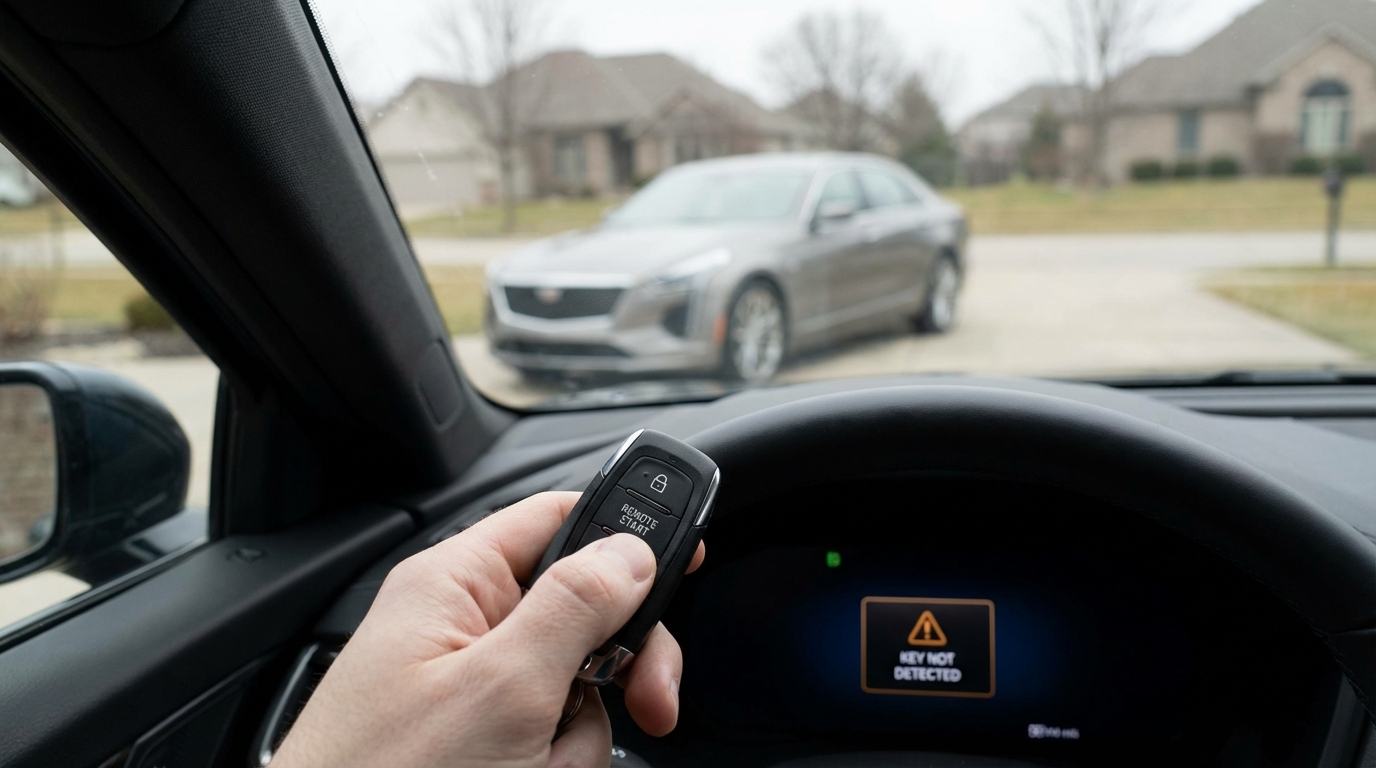
- Check the Fob Battery First: It is the number one reason remote start fails. If the light on the remote is weak or doesn't flash, swap the battery.
- Check Engine Light: If your dashboard has a check engine light on, most factory systems disable remote start for safety.
- Hood Latch Sensor: If the car thinks the hood is open (even if it looks closed), it wont start to protect mechanics.
- Valet Mode: Accidental button pressing can put the system into "Valet Mode," which disables the starter.
- Fuel Level: Many modern cars disable remote start if the gas light is on.
The Short Answer: Why It Isn't Working
If your remote start isn't working, it is almost certainly one of three things: your key fob battery is dead, your car has a Check Engine Light on, or a door/hood is open. Before you spend money at a mechanic, try your spare key fob. If the spare works, you just need a $5 battery for your main remote.
If the spare doesn't work either, look at your dashboard. Is the "Check Engine" light illuminated? If yes, the car's computer has disabled remote start to prevent engine damage. If there are no lights on the dash, walk around the car and make sure all doors, the trunk, and specifically the hood are slammed shut tight.
Those are the quick checks. But if you've tried those and you're still shivering in the cold while your car sits there silent, we need to dig a little deeper into the details.
1. The Key Fob Battery (The Usual Suspect)
Let's be real, we often overlook the simplest things. Remote start systems require a strong signal to reach the car. Even if your key fob still has enough juice to unlock the doors from three feet away, it might not have enough power to send the remote start signal from inside your house. Remote starting usually requires a long press or a sequence of buttons that demands more continuous power than a quick "unlock" click.
How to check it:
- Look at the LED light on the fob. When you press the button, is it bright and solid? Or is it flickering and dim?
- As I mentioned earlier, grab your second key fob. If the second one works, head to the store and buy a pack of CR2032 or CR2025 batteries (check your manual for the size).
Also, keep in mind that key fobs can lose their "programming" if the battery has been dead for a long time, though this is rare on newer cars. If you put a fresh battery in and it still does nothing, the fob might need to be resynced to the vehicle.
2. The "Check Engine" Light (CEL)
This is probably the second most common reason, and it confuses a lot of people. You might be thinking, "My car runs fine, why won't it remote start?"
Modern cars are smart. Maybe too smart sometimes. The remote start feature is controlled by the car's main computer (ECU). If the computer detects a problem with the engine-anything from a loose gas cap to a misfiring cylinder-it triggers the Check Engine Light.
Why does this stop remote start? because the car doesn't have a human driver sitting in the seat to watch the gauges. If the oil pressure drops or the engine overheats while remote started, there's nobody there to shut it off. So, as a safety precaution, most manufacturers (Ford, GM, Toyota, etc.) will completely disable the remote start feature if the Check Engine Light is on.
The Fix: You need to clear the code. Go to an auto parts store like AutoZone; they usually scan it for free. If it's something simple like a loose gas cap, tighten it, drive for a few days, and once the light turns off, your remote start should work again.
3. The Hood Pin Switch (The Silent Killer)
This one drives people crazy because you can't always "see" the problem. Every car with remote start has a safety switch under the hood. This is called a "Hood Pin" or a tilt switch.
The logic is simple: If a mechanic is working on your engine with his hands near the fan belts, you definitely don't want someone inside the house accidentally remote starting the car. That would end badly. So, if the car thinks the hood is up, it cuts power to the remote starter.
Over time, these switches get dirty, rusty, or bent. Even if your hood is closed, a faulty switch might be telling the computer, "Hey, I'm open!"
How to test it:
- Open your hood and look for a plunger-style switch along the edge of the engine bay.
- Press it down with your finger. Does it move smoothly? Is it broken?
- If you have a factory alarm, try this: Sit inside the car, close the doors, but pop the hood. Try to start the car. If the dashboard says "Hood Open," the sensor is working. If it doesn't say anything, the sensor might be disconnected or broken.
4. You're in "Valet Mode"
If you have an aftermarket system (like Viper, Compustar, or something installed at Best Buy), you almost certainly have a "Valet Mode."
Valet Mode is designed so that when you hand your keys to a parking attendant, they can't mess with your alarm settings or remote start the car for a joyride. However, it is super easy to accidentally toggle this mode on without knowing it. usually it happens if you press a specific combination of buttons on the remote, or flip a toggle switch under the dashboard.
Signs you are in Valet Mode:
- When you try to remote start, the parking lights might flash a specific number of times (like 3 times) and then nothing happens.
- The LED light on your antenna (usually on the windshield) might be solid blue or red instead of blinking.
The Fix: You'll have to Google the manual for your specific remote brand. Usually, it involves turning the key to the "On" position and tapping the lock/unlock buttons simultaneously, or flipping a small switch under the driver's side dash.
5. Your Car Battery Voltage is Too Low
Wait, didn't we already talk about batteries? That was the key fob battery. Now we are talking about the big lead-acid battery under the hood.
Remote start systems are very sensitive to voltage. Starting a cold engine takes a massive amount of power. If your car battery is old or weak, it might have enough power to start the car when you turn the key (because you are bypassing some electronic checks), but the remote start computer is stricter.
If the system detects that the battery voltage is below a certain threshold (usually around 11.5 or 12 volts), it will abort the start attempt to ensure the battery doesn't die completely. This is super common in the winter-ironically, right when you need remote start the most.
6. Door Locks and Hazard Switches
For the vast majority of vehicles, the system requires the car to be Locked before it will start. It makes sense, right? You don't want to start your car and leave it running with the doors unlocked for anyone to steal.
If one of your door lock actuators is broken (meaning one door isn't actually locking), the system might refuse to start. Similarly, if your "Door Ajar" light is on because a sensor is broken, the remote start will fail immediately.
7. Low Fuel Levels
This is a feature mostly found in newer vehicles (2015 and up). If your "Low Fuel" light is on, the car will disable remote start. The manufacturers do this to prevent you from burning up the last of your gas while the car is idling in the driveway, leaving you stranded before you even leave the house.
I learned this the hard way with my truck. I thought the system was broken for two days until I finally filled up the tank and it worked perfectly again.
8. Coolant and Oil Pressure Issues
This ties back to the Check Engine Light, but sometimes it's more specific. Some systems monitor oil pressure and coolant temperature immediately after ignition.
If you try to remote start the car, and the system sees that the oil pressure isn't rising fast enough, it will kill the engine immediately to save it. You might see the car start for 2 seconds and then shut off. If this happens, do not keep trying to force it. Go out to the car and check your oil dipstick immediately.
9. Maximum Runtime Exceeded
Did you already remote start the car twice this morning? Most factory systems have a limit. usually, you can only remote start the vehicle two times (for 10 or 15 minutes each) before you are required to physically insert the key or push the start button inside the car.
They do this to prevent carbon monoxide poisoning (in case you parked in a garage attached to a house) and to stop you from wasting an entire tank of gas by accident. To reset this counter, you just have to start the car manually once.
10. Aftermarket Wiring Issues
If you had a system installed by a third party, you are dealing with a lot of wires. A typical remote start installation involves tapping into the brake wire, the tachometer wire, the door locks, and the ignition harness.
Over time, electrical tape can get gooey and fall off, or T-taps (those little plastic connectors) can wiggle loose. If the remote start loses its connection to the "Brake Pedal" wire or the "Tachometer" (RPM) wire, it won't work.
For example, the system monitors the brake pedal. If you step on the brake, it shuts the remote start down (so you can't put it in gear without the key). If that wire disconnects or shorts out, the system might think you are constantly stepping on the brake, and it will refuse to start.
11. Subscription Services (The Modern Problem)
We live in a world of subscriptions now. If you use an app on your phone to start your car (like GM's OnStar, FordPass, Toyota Remote Connect, or DroneMobile), check your billing status.
I've had friends panic that their car is broken, only to realize their free trial of the remote start app expired yesterday. It's annoying, but these services require a data connection, and the manufacturers want to get paid for it. Log into the app store or your account portal and make sure your credit card isn't expired.
Troubleshooting Steps: A Quick Checklist
If you want to fix this yourself, follow this order:
- Replace the fob battery. It's cheap and easy.
- Check for Dashboard Lights. Clear any check engine lights.
- Check Physical Latches. Open and slam the hood, trunk, and all doors.
- Verify the Start Sequence. Are you pressing "Lock, Lock, Start"? Or "Lock, Hold Start"? Google the specific sequence for your year and model.
- Test the Brake Lights. Have a friend stand behind the car. When you press the brake, do the lights turn on? If not, a blown brake fuse could be preventing the remote start from sensing the safety pedal.
- Spare Key Test. Try the other key. If it works, your main key is the issue.
Frequently Asked Questions
Can cold weather stop remote start from working?
Indirectly, yes. The cold weather itself doesn't stop the signal, but extreme cold drops your car battery's voltage. If the voltage drops too low, the remote start system will abort the start to save what little power is left.
Does the Check Engine Light disable remote start?
On almost all factory-installed systems, yes. It is a safety feature to prevent the engine from running while damaged. You must clear the code (fix the problem) to get remote start back.
Why does my car start, run for 5 seconds, and then turn off?
This is usually a "Tachometer" issue or an immobilizer issue. The system starts the car, but doesn't get a confirmation signal that the engine is actually running (RPMs), so it shuts down to be safe. It could also mean the car's security chip isn't being read correctly.
How do I know if I am in Valet Mode?
If you have an aftermarket alarm, look at the antenna light. If it's solid blue or red (not blinking) when the car is off, you are likely in Valet Mode. Also, parking lights usually flash differently when you try to start it.
Can I reset my remote start system?
For factory systems, disconnecting the negative terminal of the car battery for 15 minutes can sometimes reset the computer modules. Just be aware this might reset your radio stations and clock too. For aftermarket systems, you usually need to find the "Valet Switch" under the dash.