
Key Takeaways
- Dead Fob Battery: The #1 reason your remote start wont work is a dead CR2032 battery in your remote.
- Check Engine Light: If your dashboard has a warning light on, the system disables remote start to protect the engine.
- Hood Pin Switch: A broken or corroded hood latch sensor makes the car think the hood is open, preventing a start for safety.
- Valet Mode: You might have accidentally toggled a switch that puts the system to sleep.
- Too Many Attempts: Most cars limit you to two remote starts before you have to physically turn the key.
The Short Answer
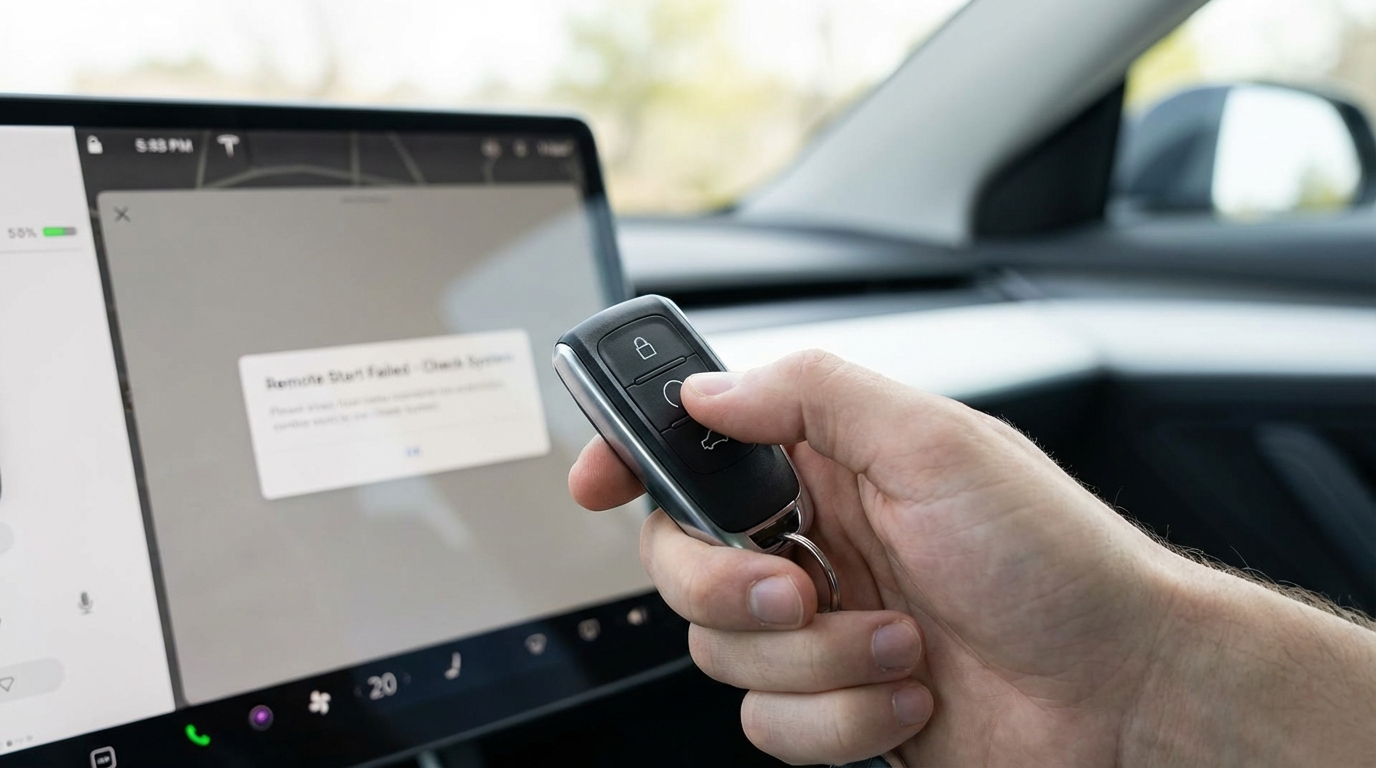
If your remote start isn't working, it is almost always one of three things: your key fob battery is dead, your car has a Check Engine Light on, or the car thinks a door or hood is open. Before you spend money at a shop, change the battery in your remote and check your dashboard for warning lights. If the "Check Engine" light is on, the computer disables remote start to prevent damaging the engine while you aren't looking at it.
Now, lets dig into the nitty-gritty of why this is happening and how you can fix it yourself.
1. The Key Fob Battery (Start Here)
I know this sounds obvious, but you wouldn't believe how many people overlook it. I've done it myself. You press the button, the little light flickers weakly (or not at all), and the car does nothing. Most remote start fobs use a lot more power than a standard keyless entry remote because they have to send the signal much further.
Even if your fob still unlocks the doors, it might not have enough juice to send the "start" command. The start signal is a long-range transmission. If the voltage drops even a little bit, the range gets cut in half or worse. Go to the store, grab a 2-pack of CR2032 batteries (thats the most common size, though some use CR2016 or CR2025), and swap it out.
If you have a "2-way" remote (the kind with an LCD screen or LED lights that beep back at you), these eat batteries for breakfast. If the screen is dim or the beep sounds sad, swap the battery.
2. The "Check Engine" Light is On
This is probably the second most common culprit. Modern cars are smart, maybe too smart sometimes. The computer (ECU) constantly monitors the health of the engine. If it detects a problem-anything from a loose gas cap to a misfiring cylinder-it triggers the Check Engine Light (CEL).
When that light is on, the car enters a sort of safety mode regarding remote features. According to most manufacturer manuals, the logic is simple: if the engine is sick, running it without a driver present to watch the gauges could be catastrophic. The car refuses to remote start to save itself.
The Fix: You need to clear the code. If you have an OBDII scanner, plug it in and see what the code is. If it's something silly like an EVAP leak (often a loose gas cap), tighten the cap and clear the code. Once the light is off, your remote start should work again immediately.
3. The Hood Pin Switch (The Silent Killer)
This one drives people crazy because you can't see it from the driver's seat. Every remote start system, whether it is factory-installed by Ford or Toyota, or an aftermarket Viper system, has a safety feature called a "Hood Pin."
This is a tilt sensor or a plunger switch under the hood. Its job is to tell the car if the hood is up. Why? Because if a mechanic is working on your engine and you accidentally pocket-dial the remote start, the engine could roar to life and injure them. It's a massive liability issue.
Over time, these switches get dirty, rusty, or bent. If the switch breaks or corrodes, the circuit stays "open," and the car thinks the hood is up 24/7. Consequently, the car will refuse to start.
How to test it:
- Get in the car and turn the ignition on.
- Look at your dashboard. Does it say "Hood Open"?
- If not, pop the hood and look for the switch. It's usually near the radiator support or along the fender wall.
- Press it down with your finger. If it feels crunchy or doesn't click, it might be bad.
If you have an aftermarket system, the hood pin is notorious for rusting out after a few winters. You might just need to unplug it or clean the contacts with some sandpaper.
4. You're in "Valet Mode"
This happens a lot with aftermarket systems like Viper, Compustar, or Avital. These systems have a "Valet Mode" designed for when you hand your keys to a parking attendant or mechanic. It disables the alarm and the remote start so they don't go off accidentally.
You might have triggered this by accident. Usually, the way you enter Valet Mode is by pressing a specific combination of buttons on the remote, or by flipping a hidden toggle switch under the dashboard while the key is in the ignition.
Signs you are in Valet Mode:
- The LED light on your dashboard (the blinking blue or red one) turns solid instead of blinking.
- When you try to remote start, the parking lights flash just once or don't flash at all, and the car stays silent.
- The doors still lock and unlock, but the "start" button does nothing.
Check your owner's manual for the "Valet Mode exit" procedure. Usually, it involves turning the key to the "On" position and tapping the valet button (located under the dash) once.
5. Door and Trunk Sensors
Just like the hood pin, the car monitors the doors and the trunk (or hatchback). If the car thinks a door is ajar, it wont start. This is largely for security; the car needs to be fully locked and secured before it will initialize the remote start sequence.
Sometimes a door latch sensor gets stuck in the cold. You might have noticed your interior dome light staying on longer than usual, or the "Door Ajar" light flickering over bumps. If the system sees an open zone, it aborts the start. Slamming the doors firmly or spraying some WD-40 into the door latch mechanism can sometimes free up a sticky sensor.
6. Maximum Attempt Limits
Did you know most cars have a limit on how many times you can remote start them in a row? It's usually two.
Let's say its a freezing morning. You remote start the car. It runs for 10 or 15 minutes and shuts off. You're still not ready, so you start it again. It runs another cycle and shuts off. If you try to do it a third time, most factory systems (GM, Ford, Honda, etc.) will ignore you.
They do this to prevent carbon monoxide buildup (in case the car is in a garage attached to a house) and to save fuel. To reset this counter, you just have to go out to the car, insert the actual key (or push the start button), and turn the ignition on and off. That resets the "counter" and you can remote start again.
7. The Hazard Light Flashes (Diagnostics)
This is a pro tip. When your remote start fails, the car usually tries to tell you why. Watch the parking lights or hazard lights on the car when you press the button.
If you press start and the car fails, the lights will usually flash a specific number of times. For example, on many Compustar units:
- 3 Flashes: Hood is open (or broken sensor).
- 7 Flashes: Car is in Valet Mode.
- 2 Flashes: Brake pedal is being pressed (or a bad brake switch).
Count the flashes. Then, Google "[Your Car/Alarm Brand] remote start error codes flashes". You will find a chart that tells you exactly what the computer is complaining about. It saves a ton of guessing.
8. Low Car Battery Voltage
We talked about the remote battery, but what about the big battery under the hood?
Remote start systems are sensitive to voltage. When you ask the car to start, it checks the battery level first. If the battery is sitting at 11.5 volts or lower (which is weak), the system might decide it doesn't have enough power to crank the engine safely and still keep the electronics alive. It aborts the start to save what little power is left so you don't get stranded.
If it's super cold out (like below zero), your car battery is already struggling. If your remote start tries to crank and fails, or just clicks, your car battery might be on its last legs. If the car starts fine with the key but not the remote, it could be a voltage threshold setting in the remote start brain that is set too high.
9. The Brake Pedal Switch
You know how you have to press the brake to shift out of park? Or how pressing the brake shuts off the remote starter once you get in?
There is a switch behind your brake pedal that turns your brake lights on. If that switch shorts out or gets stuck in the "on" position, the remote starter thinks you are pressing the brake. As a safety feature, pressing the brake kills the remote start (so someone can't steal your car while it's idling).
If the car thinks the brake is being pressed, it will never start. Have a friend stand behind the car. Without touching the pedal, are the brake lights on? If yes, that's your problem.
10. Coolant and Oil Issues
This is less common on factory systems but happens on high-end aftermarket ones. Some systems monitor the "Tach signal" (engine RPM). If the car starts but the RPMs drop too low or spike too high, the system cuts the engine to prevent damage.
Also, some systems monitor oil pressure. If it takes too long for oil pressure to build up (common in extreme cold with thick oil), the system might panic and shut down. It's the car trying to protect itself, even if it's annoying for you.
11. Programming Loss
It's rare, but sometimes the remote and the car just stop talking. They lose their "pairing." This can happen if the car battery dies completely and stays dead for a while, or if the remote takes a swim in the washing machine.
Re-programming a remote varies wildly by car. On some older GMs, you can do it yourself by holding buttons on the door panel. On newer cars, you usually need a locksmith or the dealership to hook up a computer to the OBD port. If you replaced the battery in the fob and it still does absolutely nothing (no lights, no locks), it might have lost its programming.
12. Environmental Interference
Sometimes, it really isn't the car. It's where you are parked.
Radio Frequency (RF) interference is a real thing. If you are parked near high-tension power lines, massive radio towers, or in a dense concrete parking garage, the signal from your fob might just be getting drowned out.
Also, did you recently tint your windows? High-end metallic window tint can act like a Faraday cage, blocking the signal from getting into the car. If your remote start worked fine until you got that sweet limo tint, you might have blocked your own antenna.
When to Call a Pro
If you've checked the batteries, ensured the hood is closed, cleared any engine codes, and the car still wont start, it's time to find a shop.
If you have an aftermarket system (Viper, Python, etc.), take it to a car audio/security shop, not the dealership. The dealership usually wont touch aftermarket wiring. If it's a factory system (Honda, Ford, Subaru), you pretty much have to go to the dealer because the software is proprietary.
Expect to pay a diagnostic fee (usually around $100) for them to pinpoint the electrical gremlin. But honestly, 9 times out of 10, it's just that hood pin or a dying battery.
Frequently Asked Questions
Why does my car start then immediately turn off?
This usually means the system isn't detecting the engine running signal (Tach signal). The remote starter cranks the engine, the engine fires, but the starter doesn't "know" it's running, so it cuts power. It can also be a security immobilizer issue where the car key's chip isn't being read correctly by the bypass module.
Can cold weather stop remote start from working?
Yes, indirectly. Cold weather drains car batteries. If the voltage drops below a certain threshold, the remote start won't engage. Also, extreme cold can make hood pin sensors freeze and stick in the "open" position.
Will a Check Engine Light disable remote start?
Yes, on almost all modern vehicles (2010 and newer), a Check Engine Light will automatically disable the factory remote start system. You must fix the engine issue and clear the code before it will work again.
How do I reset my remote starter?
For most factory cars, insert the key, turn the ignition to ON (don't start it), then OFF, and repeat 3-4 times. For aftermarket systems, unplugging the antenna (usually on the windshield) for a minute can sometimes reset the signal. Otherwise, look for a "Valet Switch" under the dash.
Why do my lights flash but the car doesn't start?
The flashing lights are an error code. Count the flashes! 3 flashes usually means a hood error; 7 flashes usually means Valet Mode. Consult your specific user manual to decode the flashes.