
Key Takeaways
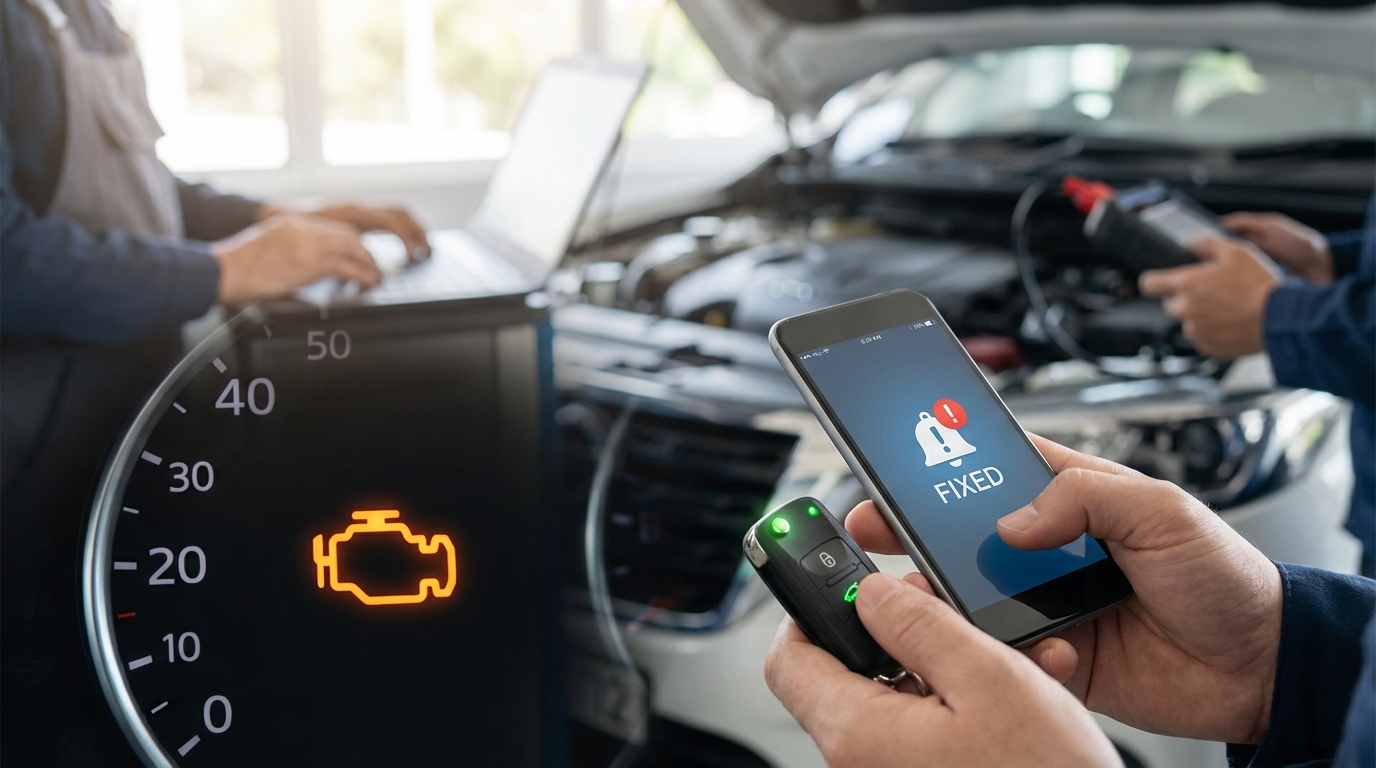
- The Short Answer: No, most cars will disable the factory remote start feature if the Check Engine Light (CEL) is on.
- Why: It is a safety feature designed to prevent the engine from running without supervision when there might be a mechanical issue.
- The Exception: Some older aftermarket systems (like Viper or Compustar) might still work, but it is risky to use them.
- Quick Fix: Check your gas cap first! A loose cap is the most common reason for a sudden check engine light.
- Other Causes: If the light isn't on but remote start still fails, check your hood latch switch or key fob battery.
The Short Answer: No, It Usually Won't
Let's rip the band-aid off right away. If you have a factory-installed remote start (the one that came with your car when you bought it), it is almost certainly not going to work if your Check Engine Light is illuminated on the dashboard. Whether you drive a Ford, Chevy, Toyota, or Honda, modern car computers are programmed to disable remote features the second that annoying orange light pops up.
I know, it’s incredibly frustrating. You wake up, it's freezing outside, and all you want is a warm car. You press the button, maybe the lights flash once, and then... nothing. Silence.
Basically the car is telling you, "I'm sick, and I need a doctor before I run a marathon."
Why Do Manufacturers Do This?
It feels like the car is punishing you, but it’s actually trying to save your wallet. Here is the logic behind it.
When you start your car with a key or a push-button inside the cabin, you are sitting right there. If the engine starts making a horrible clanking noise, or if the oil pressure drops to zero, or if smoke starts pouring out from under the hood, you are there to shut it off immediately. You are the safety monitor.
When you use remote start, the car is all alone. It could be running for 10 or 15 minutes without anyone watching it. If there is a serious engine problem-like a misfire or an overheating issue-running the engine unattended could destroy it completely. So, car makers like General Motors, Ford, and Toyota program the ECU (Engine Control Unit) to lock out the remote start function whenever a "dtc" (diagnostic trouble code) is stored.
According to most owner's manuals, this is a "fail-safe" mode. It prevents catastrophic damage from happening while you are inside finishing your coffee.
Factory vs. Aftermarket Remote Starters
This is where things get a little bit tricky, so pay attention to what kind of starter you have.
Factory Systems (OEM)
If your remote start works off your original key fob, this is a Factory system. These are strictly tied into the car's computer. As I mentioned above, these represent about 99% of the cases where remote start fails. The computer sees the error code and says "Nope." It essentially cuts the signal to the starter relay for safety.
Aftermarket Systems
If you have an aftermarket system installed (like from Best Buy or a local car audio shop), things are different. Brands like Viper, Compustar, or Python sometimes bypass the car's main computer logic.
An aftermarket system simply mimics the electrical signal of "turning the key." Some simpler or older aftermarket units don't check for engine error codes before starting. So, yes, an aftermarket starter might still start your car even with the engine light on.
But be careful. Just because you can do it doesn't mean you should. If that light is on because of low oil pressure or a severe misfire, forcing the car to start remotely could turn a $200 repair into a $5,000 engine replacement. Use your judgment here.
The "Easy Fix" You Should Check First
Before you panic and think your transmission is blown, check the easiest thing first. I can't tell you how many times I've seen this happen.
The Gas Cap.
Believe it or not, a loose gas cap is one of the most common reasons for a Check Engine Light. The car's EVAP system (which handles fuel vapors) is pressurized. If the cap is loose, the system detects a "leak" and throws a code. Because the computer thinks there is an emissions leak, it triggers the light and disables your remote start.
Go out to the car, open the fuel door, and tighten that cap until it clicks. Sometimes it takes a few drive cycles (turning the car on and driving for a bit) for the light to clear itself. If you're lucky, the light goes off, and your remote start works again tomorrow morning.
What Exactly Is Wrong? (Common Codes)
If the gas cap didn't fix it, you need to know why the light is on. You don't necessarily need a mechanic for this part. You can buy a cheap OBDII Scanner online for like $20, or go to an auto parts store (like AutoZone or O'Reilly), and they will usually scan it for free.
Here are the usual suspects that kill remote start capabilities:
1. Oxygen Sensors (O2 Sensor)
These sensors measure the unburned oxygen in your exhaust. If they fail, your gas mileage drops and the computer gets confused about how much fuel to inject. Since the car can't guarantee it will run efficiently or safely, it disables the remote start.
2. Mass Airflow Sensor (MAF)
This measures the air coming into the engine. If this is dirty or broken, the car might stall. Manufacturers don't want the car starting remotely and then stalling out repeatedly, so they disable the feature.
3. Catalytic Converter
This is a pricey one. If your catalytic converter is failing, the car pollutes more. To prevent you from idling the car and pumping out bad fumes unnecessarily, the system locks you out.
4. Engine Misfire
This is serious. If you have a bad spark plug or ignition coil, the engine "misses" a beat. This dumps raw fuel into the exhaust and shakes the engine. If the light is flashing, do not try to start the car remotely. A flashing light means severe engine damage is happening right now.
Troubleshooting: "My Engine Light ISN'T On, But Remote Start Still fails"
Okay so this happens a lot too. You look at the dash, no warning lights. But the remote start still refuses to work. It usually honks at you or flashes the parking lights to tell you it failed.
If the engine light is off, check these things:
The Hood Latch Switch
This is probably the #1 culprit aside from the engine light. There is a safety pin or switch under your hood that tells the car if the hood is open. This is for mechanic safety-you don't want the engine remotely starting while a mechanic has their hands inside the fan belts.
Over time, this switch gets dirty, rusty, or bent. The car thinks the hood is open even when it's closed. If the car thinks the hood is up, remote start is disabled instantly. Try opening and slamming your hood firmly. If that doesn't work, locate the sensor and see if it's unplugged.
Door or Trunk Ajar
Similarly, most cars won't remote start if a door is unlocked or slightly open. Make sure all doors are slammed shut.
Key Fob Battery
Sometimes the problem isn't the car, it's the remote. If the battery in your fob is weak, it might send the "lock" signal but fail to send the stronger, longer "start" signal. Try your spare key.
Valet Mode
Some cars have a "Valet Mode" switch (often under the dash or in the glove box) that disables the alarm and remote start so parking attendants don't accidentally set it off. Check your manual to see if you accidentally toggled this on.
Low Fuel Level
Many newer Fords and GMs are smart. If the "Low Fuel" light is on, the remote start won't engage. The logic is that they don't want you to burn up the last of your gas idling in the driveway, leaving you stranded before you even leave the house.
Is It Safe to Bypass This?
I have had friends ask me, "Can I just clear the code with a scanner and then use remote start?"
Well, yes and no.
If you use a scanner to "clear" the codes, the Check Engine Light will turn off. Your remote start will work immediately after this. However, the light is going to come back on as soon as the car runs its self-diagnostics again. This might take 10 minutes or 50 miles.
Is it safe? If the code is for something minor like a small EVAP leak (emissions stuff), yeah, you're probably fine to remote start it once or twice. But if the code is for something like a cooling system error or oil pressure, you are playing with fire. Literally.
My advice? Don't make a habit of clearing codes just to get the car warm. Fix the problem.
Specific Car Brand Quirks
While most cars follow the same rules, here is what I've noticed with specific brands based on forums and mechanic friends:
- Ford / Lincoln: Very strict. Any CEL usually kills remote start. Also, check the settings in the dashboard menu-sometimes "Remote Start" gets unchecked in the settings after a battery change.
- General Motors (Chevy, GMC, Cadillac): If the Check Engine Light is on, remote start is disabled. Also, if the hood is popped, it won't work. GM vehicles usually flash the lights but won't crank.
- Toyota / Lexus: Toyota is notoriously safety-conscious. CEL on? No start. Low battery voltage? No start. Door unlocked? No start.
- Honda / Acura: Same deal. If there is a powertrain code, the system is inhibited.
- Subaru: Their Starlink system is sensitive. A check engine light usually disables not just remote start, but sometimes cruise control (EyeSight) too.
What Should You Do Now?
It's cold, your car won't start remotely, and you are annoyed. Here is your step-by-step game plan.
- Check the Dash: Confirm the Check Engine Light is actually on. If it's NOT on, check your hood latch and key battery.
- Tighten the Gas Cap: Give it a good twist.
- Read the Code: Stop by an auto parts store and get the free scan. Write down the code (it will look like P0420 or P0301).
- Google the Code: Search "Code Pxxxx [Your Car Model] remote start." This will tell you if it's serious.
- Fix the Issue: If it's a sensor, replace it. If it's a gas cap, buy a new one ($15). Once the fix is done and the code is cleared, your remote start will magically return to life.
Look, I know this isn't the answer you wanted. We all want our technology to just work. But in this case, the car is actually being a good friend by stopping you from hurting it. Get that light checked out, and you'll be back to a toasty warm commute in no time.
Frequently Asked Questions
If I clear the check engine light, will remote start work again?
Yes, temporarily. If you use a scanner or disconnect the battery to clear the code, the computer forgets the error and will allow the remote start to work. However, the light will likely come back on quickly if the underlying mechanical problem isn't fixed, disabling the remote start again.
Does the TPMS (Tire Pressure) light disable remote start?
Usually, no. Most manufacturers treat the Tire Pressure Monitoring System as a separate safety system. You can usually remote start your car even if you have a flat tire warning, though you obviously shouldn't drive on it.
Will a "Maintenance Required" light stop remote start?
No. The "Maintenance Required" light is different from the "Check Engine" light. Maintenance Required usually just means you are due for an oil change. It's a reminder, not a warning of failure. Your remote start should still work fine with a maintenance reminder.
Why does my car start, run for a few seconds, and then shut off?
This is a classic symptom of a system abort. The remote start engaged, the engine turned over, but the computer immediately detected a problem (like low RPMs, a missing security key signal, or a sudden sensor error) and killed the engine to protect it. This can also happen if the car detects the engine is idling too high.
Can I disable the safety feature so it starts anyway?
On a factory system? No, not really. You would need to hack the car's ECU, which voids your warranty and is super complicated. On an aftermarket system, a technician might be able to rewire it to ignore the status inputs, but it's highly creating a safety hazard.