
The Short Answer: Reset the System
If your remote start quit working right after you changed your car battery, don't panic. You usually just need to reset the system or clear a "hood open" error. Most of the time, the car simply forgot the security handshake or thinks the hood is still unlatched. To fix it quickly, try locking and unlocking the doors with the physical key in the door handle, or start the car manually with the key and let it run for 5 minutes to clear the computer's memory. If you have an aftermarket system (like Viper), you might've accidentally tripped "Valet Mode," which just needs a switch flip to fix.
Key Takeaways
- It’s usually safety logic: The car disables remote start if it sees a Check Engine Light or thinks the hood is open.
- Check the Hood Latch: This is the #1 culprit. Mechanics often bump the sensor, or the latch gets bent.
- Valet Mode: After power loss, some systems default to "Valet Mode" (disabled). Look for a toggle switch under the dash.
- Idle Relearn: Your car might need to "relearn" its idle RPMs before it feels safe enough to remote start again.
- Check Engine Lights: Even a minor code triggered by the battery swap can block the remote starter.
Why Does a New Battery Kill the Remote Start?
Ideally, swapping a battery should be like changing the batteries in your TV remote-pop the old one out, put the new one in, and you're good to go. But cars are basically giant computers on wheels now. When you cut the power, the Body Control Module (BCM) and the Engine Control Unit (ECU) lose their short-term memory.
It's kinda like when the power goes out at your house and the microwave clock flashes 12:00. Your car is flashing 12:00, and until it knows what time it is, it refuses to do any "risky" behavior like starting the engine without a human in the driver's seat.
Most of the time, the remote start module (whether it is factory or aftermarket) sees the power cut as a potential theft attempt or a safety hazard. So, it goes into a lockdown mode. Here is exactly how to troubleshoot this, from the easiest fixes to the slightly harder ones.
Culprit #1: The Hood Latch Sensor (Most Likely)
I cannot tell you how many times I've seen this. It is almost always the hood latch.
Here’s the deal: All remote start systems have a safety switch under the hood. It’s usually a little plunger or a tilt switch. This exists so that if a mechanic is working on the engine, the car wont accidentally start and chop their fingers off with the fan belt. It’s a crucial safety feature.
When you or the mechanic leaned over to heave that heavy battery out, it’s super easy to bump the bracket that holds this pin switch. If that bracket gets bent down even a quarter of an inch, the hood won't push the button down far enough when you close it.
The Fix: Pop the hood and look for a plunger switch near the edges or near the radiator support. Press it down with your finger. If it looks bent, gently bend the bracket back up. Close the hood firmly. If your dash light for "Hood Open" is on, your remote start will never work. Get that light off, and you fix the problem.
Culprit #2: The "Check Engine" Light
This is another safety feature that people dont realize exists. If your car has a Check Engine Light (CEL) on, almost all factory remote start systems (GM, Ford, Toyota, etc.) will disable themselves.
Why? Because the car's computer thinks, "Something is wrong with the engine. I shouldn't run without the owner watching me."
Sometimes, simply disconnecting the battery causes a momentary voltage spike or drop that triggers a false CEL code. Or, the car lost its idle memory and is running rough, triggering a code.
The Fix: Start the car manually. Look at the dash. Is the yellow engine light on? If yes, you need to clear it. You can go to an auto parts store and have them clear it for free, or drive the car for 50-100 miles. Once the car completes a "drive cycle" and sees everything is fine, the light turns off and remote start usually comes back.
Culprit #3: Valet Mode (Aftermarket Systems)
If you have a Viper, Compustar, or Python system (basically anything that didn't come with the car from the factory), you likely have a "Valet Mode."
Valet mode is designed so you can hand your keys to a parking attendant without them accidentally remote starting your car. When power is cut to these aftermarket brains, they sometimes default back to Valet Mode as a fail-safe.
How to know if you're in Valet Mode:
Look at the LED light on your antenna (usually on the windshield) or under the dash. Is it solid blue or red without flashing? Or does the parking lights flash differently when you lock it? That usually means Valet Mode.
The Fix:
This varies by brand, but here are the two common ways:
- The Switch: Look under your dashboard near the driver’s kick panel. There is often a small black toggle switch. Flip it the other way. Try the remote start.
- The Button Sequence: Some systems require you to turn the key to "Run" (don't start it), then tap the lock and unlock buttons together. You might need to Google your specific remote brand manual for this one.
Culprit #4: Lost "Tach" Programming
This sounds technical, but stay with me. It’s actually pretty simple. Aftermarket remote starters need to know how fast the engine is spinning (RPM) to know when to let go of the starter motor. They monitor the Tachometer signal.
When the battery dies or is disconnected, the remote start brain might lose this memory. It tries to start, but it doesn't know if the engine is actually running, so it shuts down immediately to prevent grinding the starter.
Symptoms: The car cranks for a split second and stops. Or it cranks, starts, runs for 2 seconds, and shuts off.
The Fix (General Steps for many systems):
- Start the car manually with the key.
- Let the idle settle down to normal (under 1000 RPM).
- Press and hold the foot brake.
- Press the remote start button on your fob (while the car is running).
- Wait for the parking lights to flash (usually once or twice). This confirms it "learned" the RPM.
- Turn off the car and try remote starting it.
Specific Fixes by Car Manufacturer
Different brands have different quirks. I've messed around with enough of these to know that a Ford acts way differently than a Honda when the battery dies. Here is a quick breakdown.
Ford / Lincoln
Fords are notorious for resetting their BMS (Battery Management System). If the car thinks the battery is old or weak (even if you just put a new one in), it disables "non-essential features" to save power. Remote start is considered non-essential.
You usually need to let the car sit for 8 hours undisturbed (locked, no touching) for the computer to relearn the battery charge level. If that doesn't work, there is a wacky "flash high beams 5 times, press brake 3 times" ritual you can find on forums, or just have the dealer reset the BMS.
GM (Chevy, GMC, Cadillac)
GM vehicles are strict about the Hood Latch. If you have a Chevy Silverado or Equinox, triple-check that hood latch. Also, GM cars usually require you to lock the doors before the remote start command works. Sometimes the battery change resets your "Remote Start" setting in the dashboard menu to "Off." Go into your radio/infotainment settings, look for Vehicle Settings > Remote Lock/Unlock/Start, and make sure it is actually checked "On."
Toyota / Lexus
Toyota is pretty bulletproof, but their security systems hate losing power. If the alarm goes off when you reconnect the battery, you need to disarm it with the physical key in the door cylinder. Turn it to unlock twice. This tells the ECU that you are the owner, not a thief.
Honda / Acura
These cars often lose the "idle learn" procedure. If the car is idling rough (shaking a bit) after the battery change, the remote start won't engage. You need to start the engine, turn off all accessories (AC, radio, lights), and let it idle until the radiator fan comes on twice. This teaches the car how to idle properly again.
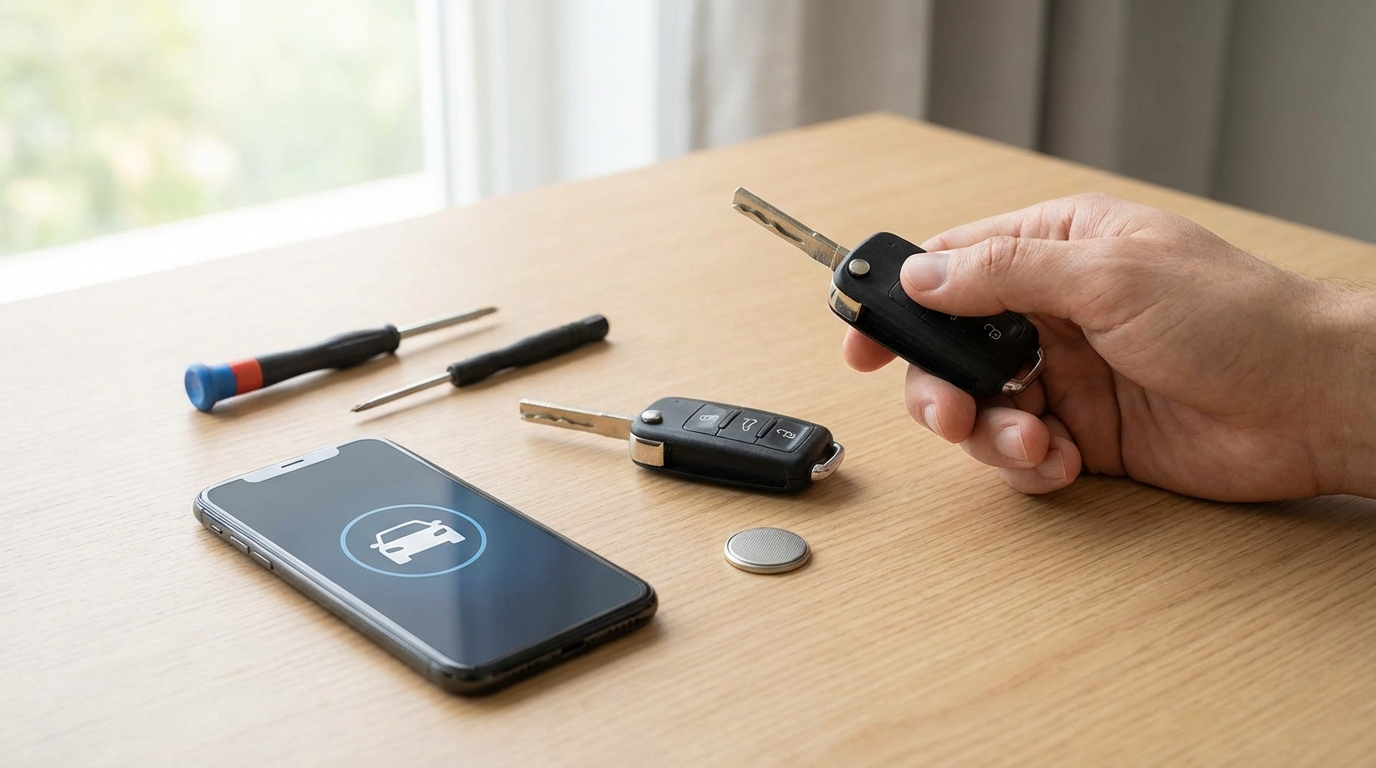
Is it the Fob Battery?
I know, I know. You just changed the car battery, so why would the key battery be the problem? It’s probably not, but coincidence is a funny thing.
Sometimes the range of the fob decreases when the car battery is fresh because the receiver is resetting its sensitivity. If you are trying to remote start from inside your house and it’s not working, walk right up to the driver's window and try it. If it works there, your fob battery might be weak, or the antenna cable under the dash got wigged when the mechanic was poking around (less likely, but possible).
The "Hard Reset" Option
If you have tried everything above-checked the hood, no check engine lights, valet switch is correct-and it still won't work, try the "IT Crowd" method: Turn it off and on again.
Sometimes the computer modules just boot up in a weird order when you connect a battery. The BCM wakes up before the security module, they get confused, and they stop talking to each other.
How to do a Hard Reset:
- Disconnect the Negative (-) battery terminal (the black one).
- Wait for about 10 to 15 minutes. Go grab a coffee. You want all the capacitors in the car to drain power.
- Some people suggest touching the disconnected negative cable end to the positive cable end (do NOT touch the battery posts together, just the cables) to drain residual power. This is safe, but if you aren't comfortable, just waiting 15 minutes works too.
- Reconnect the negative cable in one clean motion. Don't let it spark and tap multiple times. Tighten it down.
- Start the car manually immediately and let it run.
This forces every computer in the car to wake up at the same time and shake hands again. It works more often than you'd think.
When to Call a Pro
Look, I'm all for DIY. But there are times when you are just banging your head against the wall.
If you have a modern car (2015 or newer) and the remote start is factory-installed, and none of this worked, you might need a "re-flash." Sometimes the memory is just corrupted. A dealer or a high-end shop with a fancy scan tool can plug into the OBDII port and reprogram the module. It usually takes them 20 minutes and might cost you an hour of labor.
If it's an aftermarket system (Viper, etc.), take it to a car audio shop. The "brains" of those systems can fry if there was a spark when the battery was connected. It happens. It sucks, but it happens.
Conclusion
To wrap this up: It is super annoying when you fix one thing (the battery) and break another (the remote start). But 90% of the time, it's the hood latch sensor or a system reset that's needed. Don't rush to the dealer immediately. Pop the hood, wiggle that sensor, drive the car to clear the codes, and check your settings menu.
You got this!
Frequently Asked Questions
Q: Can changing a car battery damage the remote starter?
A: It is rare, but yes. If there was a large surge or spark when connecting the cables, it can blow a fuse on the remote start module. Check the fuses specifically for the remote start system (usually inline fuses under the dash) if you get absolutely no response from the fob.
Q: My lights flash when I press the button, but it won't start. What does that mean?
A: The flashes are actually a code! Count them. For example, on many systems, 7 flashes means "Timer Mode," 3 flashes means "Hood Open," and 5 flashes means "Brake Pedal Pressed." Check your owner's manual for the "Diagnostic Flash Codes." It tells you exactly why it's refusing to start.
Q: Do I need to reprogram my key fob after a battery change?
A: Usually, no. The car's memory is non-volatile, meaning it keeps the key codes even without power. However, you might need to resync the fob by holding lock and unlock together near the car, or inserting the key into the ignition and turning it on and off a few times.
Q: Will remote start work if the check engine light is on?
A: Generally, no. Almost all factory systems disable remote start when the Check Engine Light is on to prevent engine damage. You must fix the issue causing the light and clear the code first.
Q: Why does my car honk instead of starting?
A: This usually means the car detects a security breach (like a door open or hood open) or the system is in Valet Mode. If it honks once and doesn't crank, check that all doors and the trunk are fully closed.