
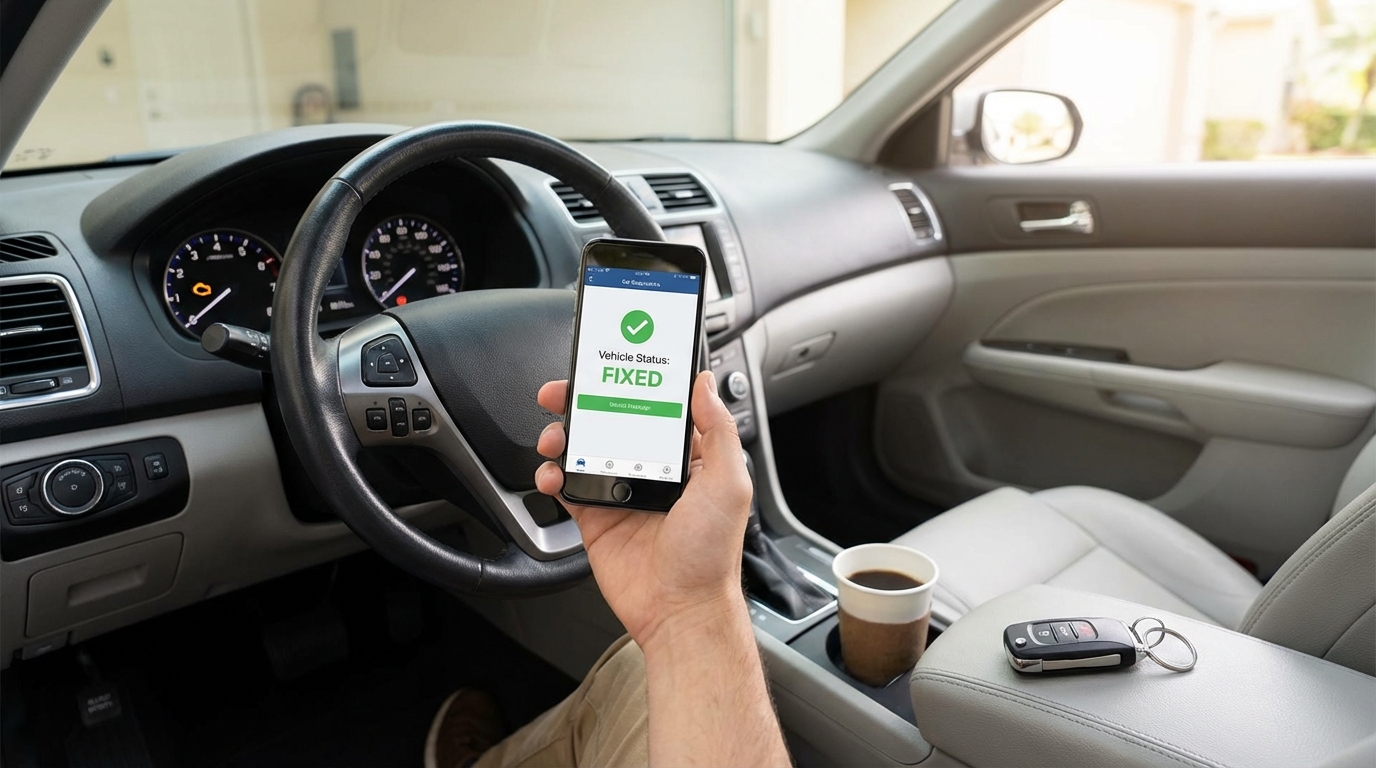
Key Takeaways
- The Short Answer: Your remote start is disabled because the Check Engine Light (CEL) is on. This is a safety feature programmed into almost all modern vehicles (Ford, Chevy, Honda, Toyota, etc.).
- Most Common Fix: Check your gas cap. If it's loose or the seal is dirty, it triggers an EVAP code, which kills the remote start. Tighten it and drive for a few days.
- The Solution: You have to fix the underlying issue causing the engine light and clear the error code from the computer. Once the light is off, remote start works again automatically.
- No Bypass: You generally cannot "override" this safety feature on a factory remote start system without fixing the problem.
Why Your Car Won't Remote Start When the Check Engine Light Is On
Look, I get it. It’s freezing outside, or maybe it's a hundred degrees, and all you wanted was to get into a comfortable car. You hit the button on your key fob, the lights maybe flashed once or twice, but the engine stayed silent. Then, when you got in and started it with the key (or the push button), you saw that little orange engine icon glowing on the dashboard.
Here is the deal: If the Check Engine Light is on, the remote start is turned off.
This isn't a glitch. It’s actually designed that way intentionally. When you start a car remotely, you aren't sitting in the driver's seat to monitor the gauges. You aren't there to hear if the engine sounds like a bag of marbles or to smell if something is burning. Because the car's computer (the ECU) knows something is wrong-that's why the light is on-it decides it's too risky to let the engine run without a human present.
Think of it like this: If you woke up feeling really sick with a fever, you probably wouldn't go run a marathon. Your body puts you in "rest mode." Your car is doing the exact same thing. It is protecting itself from potential damage.
The First Thing You Should Check: The Gas Cap
Before you panic and think you need a thousand-dollar repair, go check your gas cap. Seriously.
According to many mechanics and data from repair shops, a loose or faulty gas cap is one of the most frequent reasons for a Check Engine Light. If the cap isn't clicked tight, or if the rubber seal gets old and cracked, the fuel system loses pressure. The car's computer detects a "leak" in the evaporative emissions system (EVAP) and throws a code.
Because this triggers the Check Engine Light, it immediately disables your remote start.
How to fix it:
- Open the fuel door.
- Take the cap off.
- Look at the rubber ring. Is it dirty? Wipe it off. Is it cracked? You might need a new one (they're like $15 at an auto parts store).
- Put it back on and turn it until it clicks at least three times.
Now, here is the catch. The light wont turn off immediately. You usually have to drive the car through several "cycles" (warming up and cooling down) before the computer realizes the leak is gone. Give it a few days of normal driving. If the light goes out, your remote start will start working again like magic.
How to diagnose the real problem
If you tightened the gas cap and the light is still staring at you a week later, you need to know why the light is on. You have two options here, and neither involves guessing.
Option 1: The Auto Parts Store Trip
Most big chain auto parts stores (like AutoZone, O'Reillys, or Advanced Auto Parts) will read your engine codes for free. You just walk in and ask. They plug a little handheld computer into a port under your steering wheel, and it gives them a code, like "P0420" or "P0301".
Option 2: Buy a Cheap Scanner
Honestly, you should just own one of these. You can buy a basic OBDII (On-Board Diagnostics) scanner online for about $20. It connects to your phone via Bluetooth or just has a little screen.
Once you have the code, Google it. For example, search "2018 Chevy Silverado P0442 remote start disabled." This will tell you exactly what is going on.
Common Issues That Disable Remote Start
While the gas cap is the "hopeful" easy fix, there are a few other common culprits that trigger the light and kill your remote start capabilities. Here is what usually goes wrong:
1. Oxygen Sensors (O2 Sensors)
These little sensors live in your exhaust pipe and measure how much unburned oxygen is in the exhaust. They help the engine adjust the fuel mixture. If they go bad (and they do eventually), the car runs inefficiently. The computer triggers the light, and goodbye remote start. This is super common on vehicles over 75,000 miles.
2. Mass Airflow Sensor (MAF)
This measures the air coming into the engine so the computer knows how much fuel to inject. If the filter is dirty or the sensor gets grime on it, it sends bad data. The car might run okay, but the light comes on to warn you that your gas mileage is gonna suffer. Safety protocol kicks in, and the remote start is disabled.
3. Misfires (Spark Plugs/Coils)
If your engine feels a little shaky or rough when you're stopped at a red light, you might have a misfire. This means one of the cylinders isn't firing correctly. This is dangerous for the engine and the catalytic converter. The computer will absolutely disable remote start for this because letting a misfiring engine idle in your driveway for 10 minutes could cause expensive damage.
4. Thermostat Issues
If your car isn't warming up fast enough or stays too cool, the thermostat might be stuck open. The computer monitors how fast the engine heats up. If it's too slow, it throws a code (usually P0128). Since remote start is often used specifically to warm up the car, the system disables it because it knows it won't work effectively anyway.
Can I Just Clear the Code to Make it Work?
Yes and no. Mostly no.
If you have a scanner, you can hit the "Erase Codes" button. This will turn off the Check Engine Light immediately. In theory, your remote start will work... for about five minutes.
As soon as you start the car, the computer begins running its self-checks again. If the underlying problem (like the bad O2 sensor or the evap leak) is still there, the light will pop right back on, and the remote start will be disabled again. It’s a temporary band-aid, not a fix.
Also, warning: If you clear the codes right before you need to get a state inspection or emissions test, you will fail. The computer needs to complete a "drive cycle" to prove the system is working, and clearing the codes resets that data.
The "Limp Mode" Connection
It's worth noting that manufacturers group safety features together. When the Check Engine Light comes on, you might notice other things stop working too, not just the remote start.
- Cruise Control: On many cars (Subaru and Toyota are famous for this), the Cruise Control gets disabled along with the remote start.
- Drive Modes: Sport modes or Eco modes might be locked out.
- 4WD/AWD Systems: In severe cases, the traction control lights might come on too.
They do this to force you to pay attention. They know if they just leave a little orange light on, we'll ignore it for months (guilty as charged). But if they take away our remote start in the middle of winter? You bet we're gonna go get it fixed.
Factory vs. Aftermarket Remote Starters
Everything I've said above applies to Factory (OEM) Remote Starters. These are the ones that came with the car when you bought it.
However, if you went to a stereo shop and had a Viper, Compustar, or generic remote start installed, the rules might be different.
Aftermarket systems are sometimes "dumber" than the factory ones. They might not read the vehicle's error codes. I've seen aftermarket starters crank up an engine that had a flashing check engine light (which means severe engine knock). While this sounds convenient because your car warms up, it’s actually pretty risky.
However, newer, high-end aftermarket systems that integrate with the car's data bus (DBALL or iDatalink modules) will often respect the car's error status and refuse to start if the ECU says "no."
Specific Manufacturer Quirks
While the rule is pretty universal, here is how the big brands handle it according to owner forums and manuals:
Ford (F-150, Explorer, Fusion): Ford is very strict about this. If the CEL is on, remote start is dead. You won't even get a honk. It just ignores you.
GM (Chevy Silverado, Equinox, GMC Sierra): GM vehicles usually flash the lights but won't crank. On the dashboard information center (DIC), you might see a message saying "Remote Start Disabled."
Toyota/Lexus: Toyota is famous for lighting up the dashboard like a Christmas tree. If you have a check engine light, they often disable the Traction Control, Cruise Control, AND Remote Start all at once.
Honda/Acura: Similar to Toyota. The remote start won't function, and you cannot bypass it via settings.
Summary of Steps to Fix This
So, your remote start isn't working. Here is your game plan, step-by-step:
- Don't panic. It's a safety feature.
- Check the gas cap. Tighten it.
- Scan the codes. Go to an auto parts store or use your own scanner.
- Identify the part. Is it an O2 sensor? Thermostat? Spark plug?
- Fix the part. Or pay a mechanic to do it.
- Clear the code. Or drive for a few days until it clears itself.
- Enjoy a warm car again.
Fixing the Check Engine Light is usually cheaper than people think. Often it's just a sensor that costs $50 or $100. Ignoring it costs you money in bad gas mileage anyway, plus you have to freeze every morning. It's not worth it!
Frequently Asked Questions
Q: Can I disconnect the battery to clear the code and get remote start back?
A: Yes, disconnecting the negative battery terminal for about 15 minutes usually resets the computer and turns off the light. However, this is temporary. If the part is still broken, the light will come back on (sometimes instantly, sometimes in 50 miles), and remote start will stop working again. Plus, you'll lose your radio presets and clock settings, which is super annoying.
Q: My Check Engine Light is NOT on, but remote start still won't work. Why?
A: If there is no engine light, check these three things:
1. Hood Latch Switch: The car has a sensor to know if the hood is open (so it doesn't start while a mechanic is working on it). If that switch is broken or dirty, the car thinks the hood is open and won't start.
2. Key Fob Battery: The battery in your remote might be too weak to send the signal, even if it can still unlock the doors.
3. Fuel Level: Many cars (especially Fords and GMs) won't remote start if the gas light is on or fuel is very low.
Q: How much does it cost to fix a Check Engine Light?
A: It totally depends. If it's a loose gas cap, it's free. If it's an oxygen sensor, you're looking at maybe $150-$250. If it is a catalytic converter, it could be over $1,000. But remember, the diagnosis at an auto parts store is usually free.
Q: Will using remote start with a Check Engine Light damage my car?
A: The manufacturer thinks so, which is why they disabled it. If the engine is misfiring or running lean/rich, idling for long periods (which is what remote start does) is the worst thing you can do for the engine. It can overheat the catalytic converter or foul the spark plugs.