
Key Takeaways: Quick Fix List
- Weak Car Battery: The #1 cause. Cold weather drops voltage, and remote starters have a voltage cutoff safety.
- Frozen Hood Pin: If the car thinks the hood is open (due to a frozen or rusty switch), it wont start for safety reasons.
- Check Engine Light: Most systems disable remote start if there's an active engine warning code.
- Valet Mode: You might have accidentally toggled this switch, which disables remote starting.
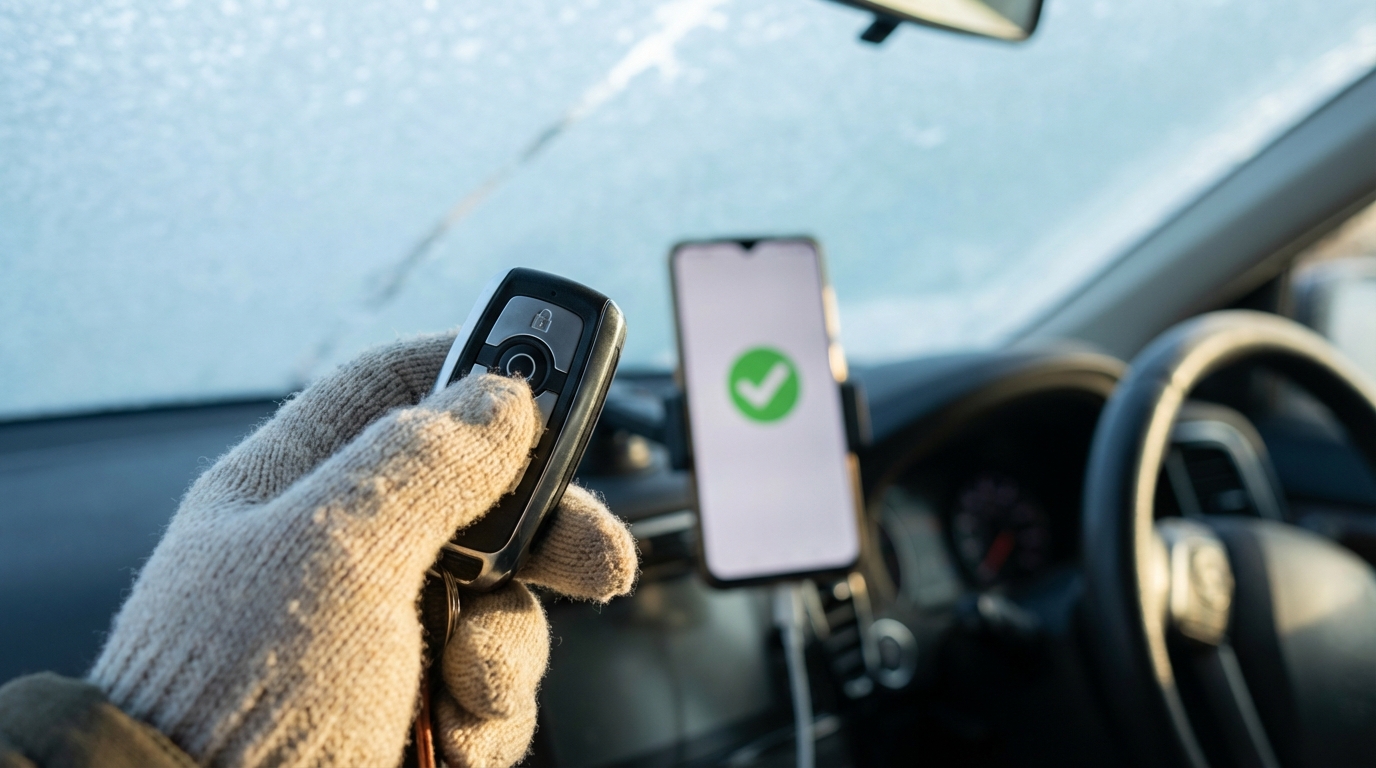
- Key Fob Battery: The remote itself might be too cold to send a strong signal.
If your remote starter isn't working specifically in cold weather, it is almost certainly a voltage issue with your main car battery, a frozen safety sensor under the hood, or thickened oil causing the system to time out. Don't panic, because most of these are fixable in your driveway.
Honestly, nothing is worse than pressing that button, seeing the lights flash, and walking outside 10 minutes later to a car that is basically an ice block. It defeats the whole purpose. I've been there, freezing my fingers off trying to figure out why my expensive Compustar system decided to quit right when the temperature dropped below zero.
Here is everything you need to know to get it fixed, starting with the most likely culprits.
1. The Main Car Battery (The Usual Suspect)
Let’s be real, this is the problem 90% of the time. You might think your battery is fine because the car starts when you turn the key, but remote starters are way more sensitive.
Here is the science part: According to pretty much every mechanic and sources like Consumer Reports, a car battery loses about 35% of its power at 32°F (0°C) and up to 60% of its power at 0°F (-18°C). That is a massive drop.
Why the remote start fails but the key works:
When you use a physical key (or push-to-start button inside), the car diverts all available power to the starter motor. But a remote starter system monitors voltage before it tries to crank. If it sees the voltage is lower than a certain threshold (usually around 11.5 or 12 volts), it cancels the start sequence to prevent draining the battery completely. It’s actually trying to save you from stranding yourself.
How to test this:
Turn on your headlights before you start the car. Are they dim? If they brighten significantly when you rev the engine, your battery is weak. If you have a multimeter, check the resting voltage. If it's sitting at 12.2V or lower in the cold, it’s probably dipping too low during the crank attempt.
The Fix:
You probably need a new battery if yours is more than 3-4 years old. If the battery is new, you might just need to drive it for 30 minutes to get a full charge. Short trips in the winter don't let the alternator charge the battery back up fully.
2. The Hood Pin Switch (The Silent Killer)
This one drives people crazy. Every remote starter (factory or aftermarket) has a safety feature called a "Hood Pin Switch." This makes sure the engine doesn't remotely start while a mechanic has their hands inside the engine bay. That would be a disaster.
Usually, this is a little rubber-covered plunger located along the edge of the engine bay. When the hood shuts, it pushes the pin down.
The Problem:
In the winter, two things happen:
- Moisture gets into the switch and freezes, causing the sensor to stick in the "Open" position.
- The metal of the hood contracts in the cold, and the rubber stopper gets hard. The hood might not be pushing the pin down far enough to make contact.
If the system thinks the hood is open, it will flash the parking lights (usually rapidly) and refuse to start. It's doing exactly what it was programmed to do.
The Fix:
Pop the hood and find the pin. Wiggle it. Is it stiff? Spray it with some silicone lubricant or WD-40 (though silicone is better for rubber). If it looks bent or rusty, you might need to bend the bracket up slightly so the hood hits it harder. If you have a factory remote start (like on a Ford or GM), this sensor is often built into the hood latch mechanism itself, which makes it harder to get to. You might need to spray de-icer into the latch.
3. The "Cold Soak" and Oil Viscosity
This is something people rarely talk about. Engines have a really hard time turning over when it is -20 degrees. The oil in your engine gets thicker (higher viscosity) as it gets colder.
Most remote starters have a setting called "Tach Sensing" or "Voltage Sensing." They crank the engine for a specific amount of time (say, 0.8 seconds) and wait to see if the engine is running. In extreme cold, the thick oil makes the engine crank slower. The remote starter might try for that 0.8 seconds, fail to get the engine spinning fast enough, and then give up.
Usually, the system will try 3 times and then shut down completely.
The Fix:
- Check your oil: Are you using the right weight for winter? If your manual says 5W-20 and you are using 10W-30, that oil is gonna be like molasses in January.
- Reprogramming (Advanced): If you have an aftermarket system (like Viper or Compustar), you can sometimes increase the "Crank Time." You might need to check your manual for this, or take it to the shop that installed it. They can bump the crank time up to 1.0 or 1.2 seconds to give the engine a fighting chance.
4. Check Engine Lights (Limp Mode)
Did you know that on almost all modern cars (Toyota, Honda, Ford, etc.), the factory remote start is automatically disabled if the "Check Engine" light is on?
The car’s computer logic is basically: "Something is wrong with the engine. I should not let this run unattended."
In the winter, check engine lights pop up more often. This can be caused by:
- A loose gas cap (seals get hard in the cold).
- EVAP system sensors freezing.
- O2 sensors reacting slowly to the cold.
The Fix:
Start the car manually. is the engine light on? If yes, that's your problem. You gotta clear the code or fix the issue. Sometimes just tightening the gas cap and driving for a few cycles will clear it.
5. The Key Fob Battery
We focus so much on the car, we forget the thing in our hand. Batteries rely on chemical reactions to create electricity. Cold slows down these reactions.
If you leave your keys in a cold mudroom or your garage, the little coin battery (usually a CR2032) inside the fob might be too weak to send the signal through your walls and out to the driveway. Cold weather shrinks the range of radio frequencies effectively.
The Fix:
Replace the battery. It costs like $5 for a two-pack. Also, try the classic "Chin Trick." Hold the key fob against your chin or head when you press the button. Your skull acts as a resonator and actually extends the range. It sounds stupid, but it works. Science says so.
6. Valet Mode
This happens to me at least once a winter. I'll be fumbling with my keys with gloves on, and I accidentally hit a button combination that puts the system into "Valet Mode."
Valet mode disables the remote start features (so a parking attendant doesn't accidentally start your car in a parking garage) but keeps the lock/unlock features working.
Signs you are in Valet Mode:
- The parking lights don't flash when you lock the car.
- The LED light on your antenna (usually behind the rearview mirror) is solid blue or red instead of blinking.
- The remote makes a different "error" beep when you press start.
The Fix:
It depends on your brand.
Compustar: Turn the key to "On" and then tap the brake pedal, or press the Lock + Trunk buttons simultaneously.
Viper: Open the door, turn the key to "On", press the Valet button (hidden under the dash usually) once, then press it again and hold it.
You'll need to Google "[Your Brand] exit valet mode" to get the exact sequence.
7. Coolant Temperature Sensors
Some cars, especially diesels or high-tech German cars, have sensors that measure the coolant temp. If the sensor is faulty and tells the computer the engine is overheating (even if it's freezing outside), the remote start won't engage.
Conversely, if it tells the computer the engine is -400 degrees because of a broken wire, the computer might panic and prevent the start to save the fuel injectors from dumping too much fuel.
Detailed Troubleshooting Guide (DIY Style)
Okay, so you want to figure this out today without paying a shop $100 just to look at it. Follow these steps in order.
Step 1: The Manual Start Test
Go outside. Put the key in. Start the car. Does it struggle? Does it crank slowly-rur... rur... rur... vroom? If yes, it's your battery or oil. The remote start is sensing that struggle and giving up.
Step 2: The Dashboard Scan
With the car running, look at the dash. Is the Check Engine Light on? Is the TPMS (Tire Pressure) light on? Believe it or not, some cars won't remote start with low tire pressure. Fix any warning lights first.
Step 3: The Hood Pin Test
With the engine running, pop the hood. Does the car warn you the hood is open? If your car has a dashboard display that says "Hood Open" and it doesn't say that when you pop it, your sensor is broken or frozen. The car doesn't know the position of the hood, so the remote start defaults to "Unsafe/Off."
Step 4: The Brake Pedal
Most remote starters have a safety kill switch on the brake pedal. If your brake lights are stuck on (faulty switch), the remote starter thinks someone is in the car pressing the brake, and it wont start. Check if your brake lights are staying on when you walk away from the car.
Factory vs. Aftermarket: A Big Difference
It is important to note what kind of system you have.
Factory Systems (Honda, Ford, Chevy, Subaru):
These are integrated deeply into the ECU. They are very conservative. If the temperature is below a certain point, they might turn on the heated seats automatically, but they are also very strict about battery voltage. If your key fob range sucks in the winter, that is just typical factory limitation. They don't have long-range antennas.
Aftermarket Systems (Viper, Compustar, Python):
These are usually more robust but prone to installation issues. In the cold, cheap electrical tape used by the installer can harden and peel off, exposing wires. Ground wires can get rusty from road salt, causing a bad connection. If you have an aftermarket system that’s dead, check the ground wire. It’s usually a black wire screwed into the metal chassis under the dashboard.
Prevention for Next Time
If you live somewhere where it hurts to breathe outside (looking at you, Minnesota and Canada), you need to help your car out.
- Get a Battery Maintainer: If you park near an outlet, plug in a trickle charger. It keeps the battery warm and fully topped off.
- Block Heater: Use it. If your oil is warm, the car cranks easier, and the remote start is less likely to time out.
- Synthetic Oil: Switch to full synthetic oil. It flows much better at sub-zero temps.
Look, I know it's frustrating. You pay good money for a remote start specifically for these days. But usually, the remote starter is actually working perfectly-it’s the car or the battery that’s failing the safety check. Swap that battery, grease that hood pin, and you should be good to go.
Frequently Asked Questions
Why does my remote start flash the lights but not start?
The flashes are a code! Usually, 7 flashes meant "Timer Mode," 3 flashes might mean "Low Voltage," etc. Look at the antenna (the little receiver on your windshield). The number of flashes tells the mechanic exactly what is wrong. Check your user manual for the "Diagnostic Error Codes."
Can cold weather break my key fob?
It won't break it permanently, but LCD screens on fancy 2-way remotes can freeze and become sluggish or black out. The battery inside creates less voltage when frozen. Warm it up in your hands for a minute and it should work fine.
Is it bad to remote start your car in the cold?
There is a lot of debate on this. Technically, idling a car for 20 minutes isn't great for the engine (it can cause fuel dilution in the oil). However, for safety (defrosting windows) and comfort, it's fine. Just don't let it run for 30 minutes. 5 to 10 minutes is plenty to get the oil circulating and the windshield clearing.
Why does my car start, run for 5 seconds, and then turn off?
This is usually a "Tachometer Sensing" issue. The remote starter doesn't "know" the car is running, so it cuts power to the starter thinking it failed. In the cold, engine RPMs are erratic. The system might need to be "re-learned" to the engine's idle speed. You can usually do this by starting the car with the key and holding the remote start button for a few seconds (check your specific manual).
Does a check engine light disable remote start?
Yes, on almost all factory systems and many modern aftermarket systems connected to the car's data bus. You cannot override this safely without fixing the cause of the engine light.