
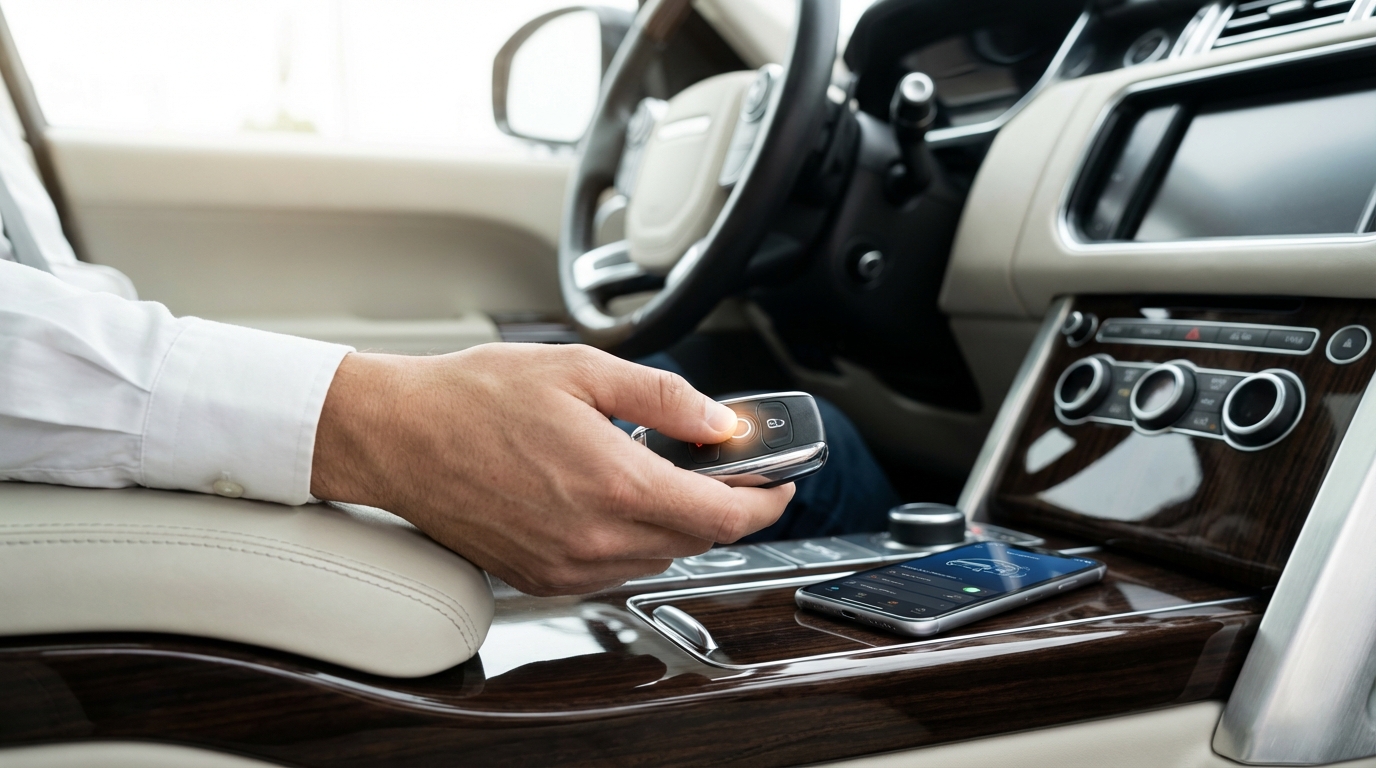
Why Did My Remote Start Stopped Working? Here is the Fix
The most common reason your remote start stopped working is a dead battery in your key fob. If the remote lights up but the car doesn't react, the next most likely culprit is your car is in "Valet Mode," or your Check Engine Light is on. Safety systems in modern cars will automatically disable the remote start feature if the engine computer detects a problem.
I know how frustrating it is. You press the button, waiting for those parking lights to flash, and... nothing. You're standing in the cold (or heat), and now you actually have to get in a freezing car. Let's figure this out together so you don't have to deal with that again.
Key Takeaways
- Check the Fob Battery: It’s the number one cause. Even if the light flashes, the signal might be too weak.
- Look for the Check Engine Light: If your dashboard has a warning light on, the remote start is usually disabled for safety.
- Valet Mode: You might have accidentally put the system into sleep mode.
- The Hood Pin: A broken or rusty hood switch will stop the car from starting to protect mechanics.
- Too Many Starts: Most systems only allow two remote starts in a row before you need to use the actual key.
1. The Key Fob Battery is Dead (Or Dying)
Let's start with the easiest thing first. 90% of the time, it's just the battery in your remote. I know, you're probably thinking, "But the little LED light still blinks when I press the button!"
Here's the thing though. Sending a remote start signal requires a lot more power than just unlocking the doors. The battery might have enough juice to flash that little LED or pop the trunk, but not enough "oomph" to send the complex start command all the way to the car.
If you have a spare key fob, try that one. If the spare works, you know for sure the battery in your main remote is toast. You can pick up a CR2032 or whatever coin battery it takes at the grocery store for a few bucks. It's an easy fix.
2. Your Car is in "Valet Mode"
This happens way more than you'd think. Valet mode is a safety feature designed so that when you hand your keys to a parking attendant or a mechanic, they don't accidentally start the car remotely while working on it.
Sometimes we accidentally trigger this mode just by having the keys in our pocket. Maybe you sat on the fob, or the buttons got pressed against your keys while you were walking.
How to tell:
If you have an aftermarket system (like Viper or Compustar), look at the antenna on your windshield. If the LED light is solid blue or red without flashing, it might be in Valet Mode. Also, if you press the start button and the parking lights flash usually three times quickly but the engine doesn't crank, that is a classic sign.
How to fix it:
For many systems, you just need to turn the ignition on and tap the "lock" and "trunk" buttons at the same time. However, every brand is different. You might need to Google your specific remote model + "exit valet mode".
3. The Check Engine Light (CEL) is On
This is a big one that people forget about. Modern cars are smart, sometimes too smart for their own good. If your car’s computer detects an issue with the engine-anything that triggers the Check Engine Light-it will almost always disable the remote start.
Why? It's a safety thing.
The car doesn't know if the light is on because of something minor like a loose gas cap, or something major like low oil pressure. Since you aren't in the driver's seat to watch the gauges, the computer plays it safe and refuses to start the engine to prevent damage. According to most owner's manuals, this is standard behavior for factory-installed remote starters.
Go start your car manually with the key. Look at the dash. Is the yellow engine light on? If yes, you need to clear that code or fix the problem before the remote start will work again.
4. The Hood Pin Switch is Broken or Misaligned
Under the hood of your car, there is a safety switch called a "hood pin." Its job is to tell the car if the hood is open or closed. This is super important because you definitely don't want the engine to remote start while a mechanic has their hands inside the engine bay replacing a belt. That would be a disaster.
Over time, these switches get dirty, rusty, or bent. If the switch breaks or gets disconnected, the car thinks the hood is open all the time. If the car thinks the hood is open, it will simply refuse to start.
What to look for:
Pop the hood and look along the edges for a plunger-style switch. If it looks corroded or bent, wiggle it. Sometimes giving it a clean with some WD40 helps. If you have an aftermarket system, these switches are notoriously cheap and fail often. You might need to just replace it or bend the bracket back up so it makes contact with the hood.
5. You've Hit the "Max Start" Limit
Did you know most remote starters have a limit on how many times you can use them in a row? Usually, you can remote start the car twice (run it for 10 or 15 minutes each time). After that, the system locks out.
The manufacturers do this to prevent carbon monoxide buildup if you accidentally start the car in a garage, and to save fuel. If you've already remote started the car twice this morning to melt the ice, the third time won't work. You have to go out, insert the actual key (or push the start button inside), and cycle the ignition to reset the counter.
6. Door Locks or Trunk Status
Remote starters are picky about security. If a door is slightly ajar, or the trunk isn't slammed shut all the way, the system won't engage. It wants the car to be fully sealed and locked before it fires up the engine.
Walk around the car. Open and slam all the doors and the trunk. Hit the lock button on your fob and listen for the horn honk. If the car doesn't honk or flash the lights when you lock it, it means it thinks something is still open. Once you get that "locked" confirmation, try the remote start again.
7. Low Vehicle Battery Voltage
We talked about the remote battery, but what about the car battery? Cold weather kills car batteries. We all know that.
When you start a car with a key, you are physically turning the switch. But when a remote starter does it, it relies on electronics to sense the voltage. If your car battery is getting old and the voltage drops below a certain point (usually around 11.5 volts), the remote start brain might abort the start to save what little power is left.
It’s trying to ensure there is enough juice left to keep the car's memory alive. If your car cranks really slowly when you start it manually, your battery is probably on its way out. Replacing the car battery usually fixes this immediately.
8. The "Brake Pedal" Switch
You know how you have to step on the brake to shift out of park? Or how tapping the brake pedal shuts off the remote start once you get in? well, that relies on a signal from the brake pedal switch.
If that switch is faulty or "stuck" on, the remote starter thinks you are pressing the brake. If the system thinks the brake is being pressed, it will immediately shut down (or refuse to start) as an anti-theft measure. Check if your brake lights are stuck on even when the car is parked. If they are, that's your problem.
9. Coolant Temperature Sensors
This is more common on newer vehicles with factory remote start systems (like Ford, GM, or Toyota). Some systems have a sensor that checks the engine temperature. If the engine is already hot, or if a temperature sensor is giving a weird reading, the computer might decide a remote start isn't necessary or safe.
Also, if the oil pressure sensor is faulty, the remote start will abort immediately after cranking to save the engine. It's smart, but annoying when you don't know why it's happening.
10. Aftermarket Wiring Issues
If you have an aftermarket system (one that was installed at a shop like Best Buy or a local audio place), the wiring is always a suspect. Unlike factory systems which are plugged in perfectly, aftermarket systems involve splicing wires, soldering, and T-taps.
Over time, electrical tape gets gooey and falls off. Ground wires rust. A T-tap might vibrate loose. If you recently hit a big pothole and the remote start quit working right after, a wire might have shook loose under the dash.
If you're handy, you can look under the driver's side dashboard. Look for a black box with a bunch of wires zip-tied together. Wiggle the ground wire (usually a black wire screwed into the metal of the car). If it's loose, tighten it. If that doesn't work, you might need to take it back to the installer.
11. Key Sense Switch
This is a weird one, but it happens. There is a sensor inside your ignition cylinder (where you put the key) that detects if a key is currently inside. This is to stop you from locking your keys in the car.
If this little sensor gets stuck, the car thinks a key is in the ignition 24/7. Most remote starters will not activate if they believe a key is already in the ignition (to prevent grinding the starter motor). If your "door open" chime dings even when the key is out of the ignition, this is likely your problem.
Troubleshooting Steps: A Quick Checklist
Okay, so that was a lot of info. If you're standing by your car right now, here is the order I would do things in:
- Change the remote battery. Seriously, just do it.
- Check the dashboard. Is the Check Engine Light on? If yes, that's the issue.
- Check the doors/hood. Open and close everything firmly.
- Toggle the Valet Switch. If you have a switch under the dash, flip it. Or look up the button combo for your remote.
- Listen to the car. When you press the button, does it click? Do the lights flash?
- No reaction at all: Remote battery or antenna issue.
- Lights flash but no crank: Valet mode or hood pin issue.
- Cranks but won't start: Immobilizer issue (the car isn't reading the security chip).
- Starts then immediately dies: Tachometer signal lost (the system doesn't know the car is running).
I hope this helps you get your car warm again. There is nothing worse than sitting on freezing leather seats in the morning!
Frequently Asked Questions
Can a disconnect battery reset my remote start?
Yes, sometimes. If you disconnect the main car battery for about 15 minutes, it can "reboot" the remote start brain. However, be careful-on some older aftermarket systems, losing power can cause them to lose their programming, meaning you'd have to re-pair the remotes.
Why do my parking lights flash 7 times?
In the world of remote starters (specifically brands like Compustar or Arctic Start), 7 flashes usually indicates "Manual Transmission Mode" error or a reservation mode issue. If you have an automatic car but the system thinks it's a manual, it won't start. You'd need to change the settings.
How much does it cost to fix a remote start?
If it's just a battery, it's $5. If you need a new remote fob programmed, it can cost between $50 and $150 depending on the brand. If it's a wiring issue under the dash, a shop usually charges an hourly labor rate (around $80-$120/hr) to troubleshoot it.
Why does my car shut off when I open the door?
This is actually a feature, not a bug, especially on Toyota and Lexus vehicles with Push-to-Start. The manufacturer calls this "Secure Takeover." They are worried that someone could break the window, jump in, and drive away since the engine is running. So, they force the engine to shut off as soon as a door opens, requiring you to restart it with the fob inside the vehicle.
Will a check engine light disable factory remote start?
Yes, absolutely. On almost every modern vehicle (Ford, Chevy, Honda, etc.), a Check Engine Light acts as a "kill switch" for the remote start system to prevent engine damage.